California Is Sinking

land-subsidence-poland-calif

Joseph Poland of the U.S. Geological Survey used a utility pole to document where a farmer would have been standing in 1925, 1955 and where Poland was then standing in 1977 after land in the San Joaquin Valley had sunk nearly 30 feet.

In the 1930s, scientists noticed that the land in the fertile San Joaquin Valley was sinking. The cause was a mystery. No one blamed corporate farmers who in the 1920s had begun massive pumping of groundwater to support the growth of highly profitable but very thirsty crops.

A legendary hydrologist, Joseph Poland, was assigned to solve the puzzle starting in the 1940s. Poland  realized that underneath the sinking land, groundwater was being pumped rapidly to irrigate crops. It created massive sinkholes that stretched for miles in every direction. In the farming community of Mendota, the land sank about 30 feet between 1925 and 1977.

The sinkhole is so vast that it is essentially impossible for residents to see that they are standing in one. Poland used a utility pole to build a temporary monument to show them just how much the land had sunk.

The sinking did not slow until the 1970s, after California had completed its massive canal system—the most expensive public works project in state history. It delivered water from wetter parts of the state to farmers in the Central Valley and elsewhere, relieving their reliance on groundwater. The problem was fixed—at least for a while.

An extensive report completed in 2012 revealed the astonishing truth that land was subsiding along the San Joaquin River at a rate worse than during the 1987-92 drought. It was nearing the historic rates of sinking recorded by Poland in the late 1960s. Currently, subsidence (the polite word for sinking) seems to be progressing at the astonishing rate of one to two feet per year in some areas.

There is little political will to confront the wealthy corporate “farmers” who are causing the problem, and the taxpayers quietly pay for repair and replacement of roads and bridges being destroyed by subsidence.

Last year, the state passed its first law attempting to regulate groundwater, but farmers won’t be required to meet goals until 2040 at the earliest. And the information on who is pumping what will be kept private.

The outlook for the future? A scientist with the U. S. geological survey predicts devastation of a historic proportion for California. He says that even if farmers stopped pumping groundwater immediately, the damage already done to aquifers now drained to record-low levels will trigger sinking that will last for years, even decades.

Bathing in Well Water With Arsenic

by Gene Franks

showerhead

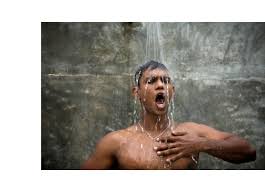
Is it safe to shower in water that is contaminated with arsenic?

Dr. Kelly A. Reynolds in a December 2016 Water Conditioning and Purificication article on arsenic got my attention in her beginning  paragraph: “Exposure to arsenic via inhalation, ingestion and skin absorption can lead to cancers of the lung, bladder and skin.” I took note because I have been advising our customers for some time that arsenic in well water is mainly a drinking water issue and that there is little or no evidence that exposure to arsenic through bathing in water that is a few parts per billion over the current recommended limit of 10 parts per billion has any serious health consequences. Consequently, when a well water  customer calls or writes with an arsenic issue, we usually recommend taking care of the drinking water, which is easy and not too expensive, and forgoing the much more costly, complicated and often unreliable whole house treatments for arsenic.
Arsenic is serious business and I don’t want to get it wrong, so I did some internet research on the topic: does arsenic, in fact, enter the body through the skin and can it be breathed in during showering?

Most authorities who address the issue of the uptake of arsenic through the skin are pretty clear on the issue.  Here are some examples:

 Unless your arsenic level is over 500 ppb, showering, bathing and other household uses are safe. Arsenic is not easily absorbed through the skin and does not evaporate into the air. — Mass.gov. (A publication of the Commonwealth of Massachusetts Office of Energy and Environmental Affairs) [Five hundred parts per billion is 50 times the EPA recommended allowable.]

Only a minimal amount of arsenic is absorbed through the skin.–   Virginia Dept. of Health.

Arsenic is not easily absorbed through the skin. Maryland Dept. of Health.

For most people, the largest source of arsenic is in the food we eat. Most foods, including vegetables, fish, and seafood, contain some arsenic. Arsenic in groundwater can enter the body by drinking the water or by eating food cooked in the water. Arsenic does not evaporate into the air and is not easily absorbed through the skin. — Illinois Dept. of Public Health.

If your skin contacts soil or water containing arsenic, only a small, harmless amount will enter your body. — Delaware Health and Social Services.
If levels of well water are above 500 parts per billion, you may want to stop using it for bathing, cooking and washing clothes. —North Carolina Dept. of Public Health and Human Services. 

Generally speaking, the main routes of contamination for people who are not exposed to arsenic in their work (occupational exposure) are drinking water first, followed by food. Absorption through the skin seems to be minimal, so arsenic exposure through hand washing, laundry, bathing, etc. is not considered to be a problem. — University of Maine.

Neither the National Research Council (1999) or the Agency for Toxic Substances and Disease Registry (2000), nor the additional literature searches, identified any controlled studies of inorganic arsenic absorption through human skin. New Jersey Department of Environmental Protection.

Historical studies indicate that skin absorption of arsenic is negligible,  so handwashing and bathing do not appear to pose a known risk to human or animal health.  Greg Reyneke, MWS, Water Conditioning and Purification Magazine, November 2021.

The statements above are typical. Some sources do note, however, that trivalent arsenic (arsenite) can pass through the skin much more easily than pentavalent arsenic (arsenate). A couple of sources say, in fact, by a factor of as much as 60:


Dermal uptake of arsenic has been underestimated up to now based on low permeability of arsenate. A new study finds that uptake of arsenic as arsenite or dimethylarsinic acid is a factor of 29 and 59 higher than that of arsenate. — Evisa. 

[Keep in mind that 29 to 59 times almost nothing can still be almost nothing.]

Trivalent arsenic is well absorbed through the skin and is 60 times more toxic than pentavalent arsenic, which is well absorbed by the gut.[1] Arsine gas is highly toxic.–  Patient.  (A UK health professionals reference site.)

No source is cited for the “well absorded through the skin” statement and the end-of-sentence footnote links only to the entry page for a pay-to-use website. Although it is not specified, the admonishment seems to be aimed at arsenic poisoning via industrial pollution rather than water.
 drinkingbathwater
In spite of Dr. Reynolds’ statement and other occasional dissenting views, I still feel good about my standard  recommendation to customers with wells a few ppb over the recommended maximum of arsenic to fix their drinking water and leave the rest alone. As the picture above would suggest, however, if there is arsenic in your water common sense precautions should be taken.

 A brief article on how to remove arsenic from water.

Dam Safety in the US


Posted December 17th, 2016

Are US Dams Safe?

Editor’s Note. The piece below is excerpted and adapted from a Circle of Blue article by Brett Walton.

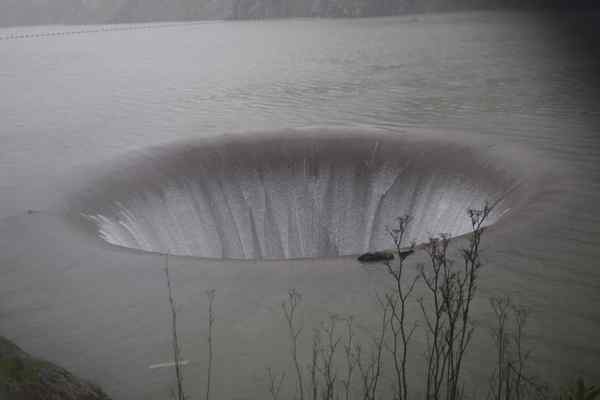
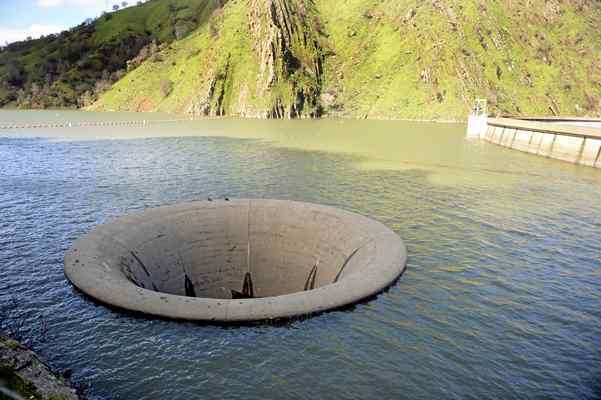
sanclementedam

If you live downstream from a dam, you hope that someone is maintaining it and monitoring its safety. This is not always the case. In Alabama, for example, all but 10% of the state’s dams are privately owned and regulatory oversight is minimal.

The universe of American dams is expansive. There are tailings dams that hold back a slurry of mine wastes, stock ponds for irrigation or watering cattle, and artificial lakes for sailing and speedboats. There are dams to detain flood waters and dams to filter debris. Then there are the hydropower behemoths such as Grand Coulee and Hoover, symbols of 20th-century engineering might. Though iconic, these canyon-bridging concrete plugs are the minority. Most dams are small structures less than 25 feet tall made of packed dirt and rock and built more than 50 years ago.

Surprisingly little is known about why individual dams fail. Few states do autopsies to learn precisely what went wrong. That is why a Stanford University professor founded the National Performance of Dams Program in 1994. The program’s goal is to learn from past failures so that managers can identify problems before they become tragedies. The program’s researchers have found that the U.S. dam industry is far behind the nuclear power and oil and gas pipeline industries in the amount of data it collects.

Not every dam failure is judged by the same criteria. The United States has a three-tier rating system that classifies a dam based on the destruction resulting from failure. The rating system is used to set design standards; the greater the risk the stricter the codes. Low-hazard dams are expected to cause minimal property damage. It is considered acceptable if these dams, as long as they are accurately categorized, fail because the risks to life and property are low. Richland County, South Carolina notes that several of its dams will fail in a 50-year flood. Significant-hazard dams are a step up. They might destroy infrastructure or cause severe property damage if breached. The most worrisome category is high-hazard potential. A rupture at one of these dams could kill people.

A new risk on the industry’s radar is climate change but engineers are still trying to figure out how droughts and severe storms will affect dam performance.

“Climate change is not doing dam safety a benefit at all,” one authority said. “We know it will change risk but it has not been quantified yet.”

Eric Halpin, deputy dam safety officer for the U.S. Army Corps of Engineers, said that the key variable is how a dam’s engineering responds to sharp shifts in weather.

“We’re living off the investments of two to three generations ago,” Halpin said. “Those dams have the science and engineering of their times embedded in them. The pace of change today doesn’t get easier. It gets harder in the future: back to back wettest years followed by five years of drought. All this has an impact on dams.”

Pure Water Gazette Fair Use Statement

Hyponatremia


Posted December 4th, 2016

Hyponatremia, or Water Intoxication

waterintoxication

Drinking too much water left a woman with a urinary tract infection seriously ill, and doctors said water intoxication can kill you. The case in point is a 59-year-old London woman who, in an attempt to “flush out her system,” drank water so copiously that she developed hyponatremia, also called water intoxication.

According to the Mayo Clinic:

Hyponatremia is a condition that occurs when the level of sodium in your blood is abnormally low. Sodium is an electrolyte, and it helps regulate the amount of water that’s in and around your cells.

In hyponatremia, one or more factors — ranging from an underlying medical condition to drinking too much water during endurance sports — causes the sodium in your body to become diluted. When this happens, your body’s water levels rise, and your cells begin to swell. This swelling can cause many health problems, from mild to life-threatening.


Hyponatremia is marked by an abnormally low level of sodium in the blood. Sodium helps regulate the quantity of water in and around cells.

There is a death rate of nearly 30 percent for patients whose sodium level drops drastically below normal. The condition can involve vomiting and significant speech difficulties.

The treatment may require medication, but usually it can be corrected simply by restricting water intake. Recovery may take a week or longer.

“The old adage to ‘drink plenty of water’ should be approached with caution if you are not vomiting, or experiencing diarrhea, or excessive sweating,” advised one doctor. “Your thirst is often the best guide to gauge when you think you need to drink more water if you have no history of kidney disease.”

Other signs of water intoxication include headaches, nausea and vomiting, confusion, loss of energy and fatigue. The illness can cause the brain to swell, coma, seizures and death.

People with normal kidney function who sometimes develop water intoxication are endurance athletes who drink more water while exercising than their kidneys can excrete.

Although doctors commonly advise patients with many ailments to “drink plenty of fluids,”  little evidence supports the recommendation. There are definitely both risks and benefits to increased fluid intake.

Reference: Tucson News was the original source, but the article itself is no longer available.

Not Afraid to Look

notafraidtolook

Since April, 2016 thousands of demonstrators have been camping out at the confluence of the Cannonball and Missouri Rivers on the Standing Rock Sioux reservation in North Dakota. These peaceful water protectors—representing more than 200 Native-American tribes, plus many nonnative allies—are demanding a halt to the construction of the Dakota Access Pipeline, which threatens the water and sacred land of the Standing Rock Sioux. Tensions are escalating—on the night of Nov. 20, North Dakota law enforcement deployed water cannons, tear gas and rubber bullets against the unarmed group in subfreezing temperatures.

On a hill above the Sacred Stone camp, a metal and concrete statue of a seated man surveys it all—the camp, the rivers, the impending construction, the often intense conflict—his expression calm but resolute. Not Afraid to Look, completed in October, is the work of Charles Rencountre, a Lakota artist based in Santa Fe, New Mexico.

Originally from South Dakota, Rencountre got his start as an artist 30 years ago by teaching himself to carve traditional, effigy-style Lakota pipes, as his grandfather did before him. Today Rencountre still focuses on effigies, though on a different scale, transforming the tiny carvings his ancestors made into monumental sculptures.

The statue at Standing Rock is based on one such effigy, a mid-19th-century Lakota pipe titled Not Afraid to Look the Whiteman in the Face. The piece features a bowl shaped like a white man’s head; on the stem, an American Indian man sits looking directly at him. The pipe was made during a time of intense conflict between indigenous tribes and the U.S. government.

“It was a really difficult time for our people. We’d pretty much lost everything we knew,” Rencountre said. “Some man out there in that world, that reality, was carving a pipe—it was a political piece that was saying, ‘We’re not afraid.'”

notafraidtolook2

Adapted from an excellent article by Clara Chaisson.  Read the full original in EcoWatch.

Trump’s Pledge to ‘Open Up the Water’ for Valley Farms: Easier Said Than Done

by Craig Miller

“We’re gonna solve your water problems.” –Donald Trump.

californiawater

California Drought Expected to End After January Inauguration

President-elect Donald Trump might have trouble living up to one of his more sweeping campaign promises in California.

On the stump in Fresno last May, he made headlines for declaring, “There is no drought” here.

It’s a bit unclear from his remarks whether he was voicing an opinion or simply reporting what some farmers told him at a pre-rally gathering. Either way, he was badly mistaken.

Though conditions have improved over much of the state since then, about 73 percent of California remains in some level drought, according to the U.S. Drought Monitor, and nearly 43 percent is still classified in “extreme” or “exceptional” drought, including much of the San Joaquin Valley.

‘Don’t Even Think About It’

But Trump also made a pledge to the assembled crowd in Fresno.

“We’re gonna solve your water problem,” he told the audience. “We’re gonna get it done and we’re gonna get it done quick. That one’s an easy one. Don’t even think about it.”

It’s unclear how much the candidate had thought about it as his comments displayed a blend of confidence and confusion. He expressed bewilderment at the current water allocation policies, which require that a certain volume of water remain in the rivers to protect the environment.

“You have a water problem that is so insane. And it’s so ridiculous, where they’re taking the water and shoving it out to sea,” he said.

“And I’m asking everybody, why, why, why, and nobody can explain why they do this.”

Actually, a lot of people could’ve explained that. About a thousand of them were gathered in Sacramento this week for the Bay-Delta Science Conference, where scientists and policy makers meet every other year to review the latest research supporting the environmentally fragile Sacramento-San Joaquin Delta.

“This was more sloganeering than fact, in the middle of the drought,” observed Jeff Mount, a senior fellow at the Public Policy Institute of California. He says a certain amount of California’s river water must flow to the sea, to keep salt water from creeping in and contaminating both drinking water and farm land — especially during droughts.

“The share that went to the environment during the worst of the drought—2014 and 2015—was vanishingly small,” he recalls.

Uphill Battle

It’s unclear how high California’s water issues will actually rank on the Trump administration’s agenda, though anxiety rose in conservation circles last week when Trump gave a spot on his transition team to Devin Nunes, a San Joaquin Valley Republican congressman and vocal proponent of pumping more Delta water to farms. (Nunes floated a “Turn on the Pumps” bill in 2009 that failed in congress.)

“It will be uphill for [Trump] to make big changes here,” suggests Jay Lund, who heads the Center for Watershed Sciences at UC Davis. Like Mount, he’s a grizzled veteran of California water debates.

“There’s a lot of state law, state regulations that would have to be overcome,” says Lund. “I think pretty much anything that anyone wants to do is gonna get petty thoroughly vetted.”

Mount says an executive order from the White House to suddenly crank up the pumps would violate both state and federal law, beginning with the federal Endangered Species Act, which relies on formal studies known as “biological opinions” to set protections for sensitive habitat.

“He could write it, but it would be illegal,” wrote Mount in an email to KQED. “It would be inconsistent with the biological opinions, and the President cannot unilaterally alter the BOs. The project operators would run the risk of civil (and in a different world) criminal penalties.”

Mount says such an order would also run afoul of the Clean Water Act and California law, though in times of drought, even more fundamental laws apply to the distribution of water.

Campaign promises are one thing, says Mount, but, “Now they have to govern, and the laws of physics apply to everyone equally.”

Article Source: KQED.

Pure Water Gazette Fair Use Statement

Water Treatments that Work and Those that Don’t

by Gene Franks

magnet2

The eminent water treatment specialist Peter S. Cartwright, a man of long experience and unchallenged expertise in the field, recently published a two part article in Water Conditioning and Purification magazine (October and November 2016) that concentrates on some of the shady areas of water treatment. Mr. Cartrwright skips the obvious health-related humbugs like “alkalizers” and concentrates on the technical aspects of genuine water treatment issues like scale prevention, TDS reduction, and removal or inactivation of bacteria and cysts.

Mr. Cartwright focuses first and foremost on  devices that “soften” water. For decades now there have been numerous attempts to replace the conventional ion exchange water softener.  Currently in North America some 785,000 residential and 60,000 commercial water softeners are sold annually, so there are strong incentives to tap into that market with alternative products. Conventional ion exchange water softeners, which actually remove scale-forming calcium carbonate (hardness) from water by exchanging it for sodium, work well and their performance can be easily verified by a simple test. However, there are many environmental and aesthetic objections to conventional softeners, so the quest for a workable alternative has been intense.

vortex

Mechanical Vortex Style “Softener”

In his discussion, Cartwright does not include alternate technologies like membrane devices (reverse osmosis and nano filtration) and sequestering systems (polyphosphates). He divides alternative scale reducing systems into five groups:

Magnetic devices that use one or more permanent magnets either attached to a pipe or inside the pipe.

Electromagnetic systems, more sophisticated than natural magnets, that also attempt to influence the way that treated scale-forming minerals behave without actually removing the minerals.

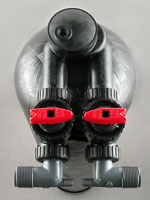
Mechanical devices that are designed to alter the pressure and flow pattern of water and somehow alter its chemistry in the process (see picture above).

Electrostatic systems that typically use two electrodes charged with high voltage DC current which alter the calcium carbonate as the water stream passes between them so that surface scaling is reduced.

Catalytic devices. These come in many configurations and sizes but are mainly housings that hold a proprietary medium designed to impart scale-reducing properties to water that passes through it. Unlike conventional softeners, they do not require power, backwashing, or chemicals. The technology is usually referred to as TAC (Template Assisted Crystallization), although one leading manufacturer calls its product NAC (Nucleation Assisted Crystallization).

What all these systems have in common is that they aim (and claim) to convert calcium carbonate into a form that does not stick to surfaces. The explanation involves the two crystalline forms of calcium carbonate, calcite, which forms hard scale, and aragonite, which supposedly does not attach to surfaces to form scale. (Although there are other constituents of hardness scale, like iron, silica, sulfate, and manganese, the main culprit is calcium carbonate in crystalline form, to that’s what most treatment strategies focus on.)

So, do any of these five strategies actually work?

According to Peter S. Cartwright:

With hundreds of manufacturers who have offered thousands of devices to the industry over the years, it is difficult to make all-inclusive statements. At the risk of doing so, my conclusion is that, with the exception of TAC, no [scale preventing] device has actually survived rigorous third-party scientific credible testing to support the reduction claims made for it.

Cartwright describes TAC technology as follows:

This process, which came on the scene in 1998, appears to minimize scaling without requiring regeneration or utilizing ion exchange. TAC utilizes polymer beads, not unlike the ion exchange resin in traditional water softeners. These beads, however, contain microscopic nucleation sites that cause calcium and magnesium crystals to form at the site and ultimately detach from the resin into the water as insoluble particles. These colloidal-sized particles do not attach to surfaces and are carried out with the water. As a result, although TAC does not actually remove hardness, it does minimize scale attachment to surfaces. This process requires no power, chemical addition or backwashing. The life of the resin is typically about three years. It has been thoroughly tested by credible, third-party institutions and has been shown to generally perform as claimed; however, the local water chemistry appears to have an effect on performance. For example, TAC has been shown to be ineffective for silica removal. 

scalenetunitprofile

TAC units are simple upflow systems that contain only a few liters of TAC resin. No regeneration is required, but they should be protected from sediment and media life is extended if they are protected from chlorine.

Reference: Water Conditioning and Purification

See also: Template Assisted Crystallization: A Softening Alternative.

PFCs


Posted November 14th, 2016

The Emergence of “Emerging Contaminants”

The EPA in 2006 made a deal with eight American companies that make or use perfluorooctanoic acid (PFOA) and perfluorooctane sulfonate (PFOS) to stop doing so. These chemicals are parts of a larger class of chemicals  known as perfluorinated chemicals (PFCs), which in turn falls under the larger group heading of “emerging contaminants.” Emerging contaminants are defined as materials having “a perceived, potential, or real threat to human health or the environment.”

The companies say that they have complied, but the EPA has made little progress in setting up any real standards or guidelines about the dangers of lifetime exposure to the chemicals.

There is a need for such determinatation, since these man-made chemicals have been linked to a disturbing array of health effects, including obesity in children, reproductive problems and cancers. Used as a surface-active agent in a slew of products from coating additives – like Teflon – to cleaning products, these compounds don’t break down under typical conditions and are extremely persistent in the environment, says the EPA.

And while PFCs may no longer be in active production, they are still being used. And, as we’re learning, there is no scarcity of them.

Telflon used in cookware coating, that was generally regarded as safe for many years, is no longer considered so. Teflon has been much in news.  Far less publicized, outside the areas where it is being found in water supplies, mostly around military bases, is PFC-containing firefighting foam.

When jet fuel burns, it makes a fire that isn’t easy to put out. Water doesn’t work. So, half a century ago the 3M Corporation, with the encouragement of the US Navy, developed a product known as AFFF (Aqueous Film-Forming Foam) to put out airplane crash fires. AFFF contains PFOS and other compounds that break down to PFOA and other PFCs.

For years AFFF has been used to put out fires and even more widely in training exercises, demonstrations, and testing activities on military bases around the nation. So it is not surprising that communities near military bases are finding PFCs in the soil and in their drinking water. With a lack of concern that has been characteristic of the military in matters of water safety, no effort was made to construct barriers to contain the foam, which sank down through the earth into the water table.

According to a  Provisional Health Advisory issued by the EPA in 2009, the maximum levels that humans should be exposed to through drinking water is 0.2 ppb for PFOS and 0.4 ppb for PFOA. Although the agency has said repeatedly that it will update these numbers, it hasn’t done so since 2009.

According to one researcher, “In some of these places, huge amounts of chemicals from the foam have been found in soil and water. At Tyndall Air Force Base in Florida, for instance, one of the telomers that can decay into a chemical similar to PFOA was found at 14,600 ppb. Near the Naval Air Station in Fallon, Nevada, where fire-training exercises were conducted for more than 30 years, PFOA has been recorded in the groundwater at levels as high as 6,720 ppb. And, at the former Wurtsmith Air Force Base in Michigan, where crash trainings also took place for more than three decades, one plume of groundwater had concentrations of total PFCs between 100,000 and 250,000 ppb.”

While advanced countries like Sweden, the EU, and Canada have banned the use of existing stockpiles of foam containing PFOS, the US has no restrictions on its use. The US military has a stockpile of a million gallons.

Home water treatment for PFCs in drinking water? Studies done by the Minnesota Department of Health find that both carbon filtration and reverse osmosis effectively remove PFCs.

Reference: Treehugger.com.

Drug Take-Back Program Aims at Protecting People and Water from the Outrageous Amounts of Leftover Drugs


Cook County, Ill., adopted an ordinance that will provide more than 5 million residents with convenient access to safe drug disposal. The ordinance makes Cook County the largest jurisdiction in the U.S. to require drug companies to safely dispose of unwanted medications, and adds to the two states, nine counties and two cities in the U.S. with similar drug take-back laws.

More than $1 billion in leftover drugs are thrown in the trash, flushed or consigned to medicine cabinets each year. Prescription drug abuse is the fastest growing drug problem in the U.S., and nearly 70% of people who begin using prescription drugs non-medically get them from a family member or friend, often from medicine cabinets. Drugs left in the home also put seniors, children and pets at risk for accidental poisoning. When flushed or put in the trash, over-the-counter medications and prescription drugs can contaminate drinking water and harm aquatic species.

Source: Water Quality Products.

Water News


Posted November 1st, 2016

Water News

October, 2016

Now, link free for your reading pleasure.

waterprotectors

Police from five states were brought in to protect pipeline interests from unruly water protectors group pictured above sitting in a prayer circle in protest of the Dakota Access Pipeline.

A Texas state legislator is proposing a vast underground water storage system that would keep the state in water during a drought of up to seven years.

Louisville gets its drinking water from the Ohio River. It is currently finding about 20 ppt of PFOA, or C8 (Teflon), in its water. The recently established EPA health advisory level for PFOA is 70 parts per trillion.

f


deepestunderwatercave

The title of world’s deepest underwater cave now belongs to the Hranice Abyss in the Czech Republic. An expedition team led by Polish explorer Krzysztof Starnawski used a custom-designed underwater vehicle to descend to a record-breaking 1,325 feet into the murky depths.

Another leak of radioactive water occurred at the the crippled Fukushima No. 1 nuclear plant.

The US Air Force is drilling 18 test wells in an attempt to determine how perfluorinated compounds, or PFCs, contained in firefighting foam, is contaminating water south of Colorado Springs. PFCs, which have been linked to prostate, kidney and testicular cancer, were found earlier this year in water systems serving about 69,000 people in Fountain, Security and Widefield. Subsequent story:  Air Force officials now admit that the base near Colorado Springs sent water laced with toxic firefighting foam into the city’s sewer system as often as three times a year.

Princeville-NC-Flooding-jpg

Hurricane Matthew brought unprecedented flooding. Princeville NC, shown above, was underwater days after the torrential rains ceased.

A horse track in Scarborough, Maine is closing its barn because of horse manure contamination that is seeping into groundwater.

The Gannon men’s water polo team snapped a 19-19 deadlock with three unanswered goals during the final 69 seconds to win a 22-19 exhibition shoot-out against Mount San Antonio.

Weeks after the hurricane, clean water is still not available to thousands of Haitians.


Recent studies have revealed the unexpected truth that the world’s water storage reservoirs are major producers of greenhouse gas, accounting for 1.3 percent of the world’s greenhouse gases—as much as the entire country of Canada. Reservoirs are big producers of methane in particular, which is 34 times more potent than carbon dioxide in environmental degradation.

riverbasinmap

This map, made by Imgurian Fejetlenfej, shows all the different river basins around the country. The Mississippi River basin is shown in pink. It takes up most of the map.


A UNESCO organization released a list of the world’s top ten water consuming countries. And the winners are:

  • China: 1.5 billion people, 362 trillion gal
  • U.S.: 300 million people, 216 trillion gal
  • Brazil: 175 million people, 95 trillion gal
  • Russia: 143 million people, 71 trillion gal
  • Mexico: 100 million people, 53 trillion gal
  • India: 1.1 billion people, 30 trillion gal
  • England: 60 million people, 20 trillion gal
  • France: 60 million people, 20 trillion gal
  • Canada: 33 million people, 19 trillion gal
  • Australia: 20 million people, 12 trillion gal

Over onr million gallons of water were lost when a 24” water main broke in Middletown, CT. “To give perspective, the average in-ground swimming pool holds 7,000 gallons—so losing 1 million gallons is like losing the water in 142 in-ground pools in an hour.”

A Pennsylvania university student accused of putting bleach in his pregnant girlfriend’s  drinking water in an attempt to harm her fetus has been charged with attempted murder and held on $1,000,000 bond.

A $250 million drinking water tunnel, called a siphon, from Brooklyn to Staten Island has been activated. The tunnel will be capable of delivering up to 150 million gallons of water per day to Staten Island.

In the city of Groves (TX) tests found lead in the water of 25% of the homes tested. City authorities blame the high lead findings on solder in the pipes of the homes themselves.