

Pure Water Annie’s Extra-Simple Instructions for Changing Filter Cartridges in Standard Drinking Water Systems


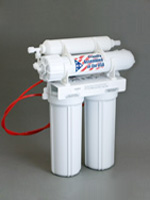
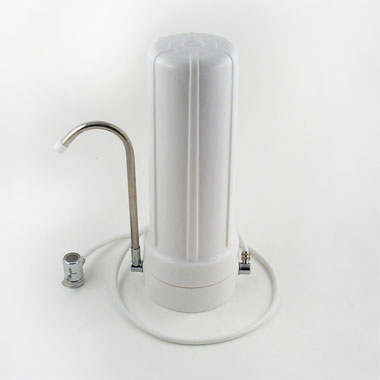
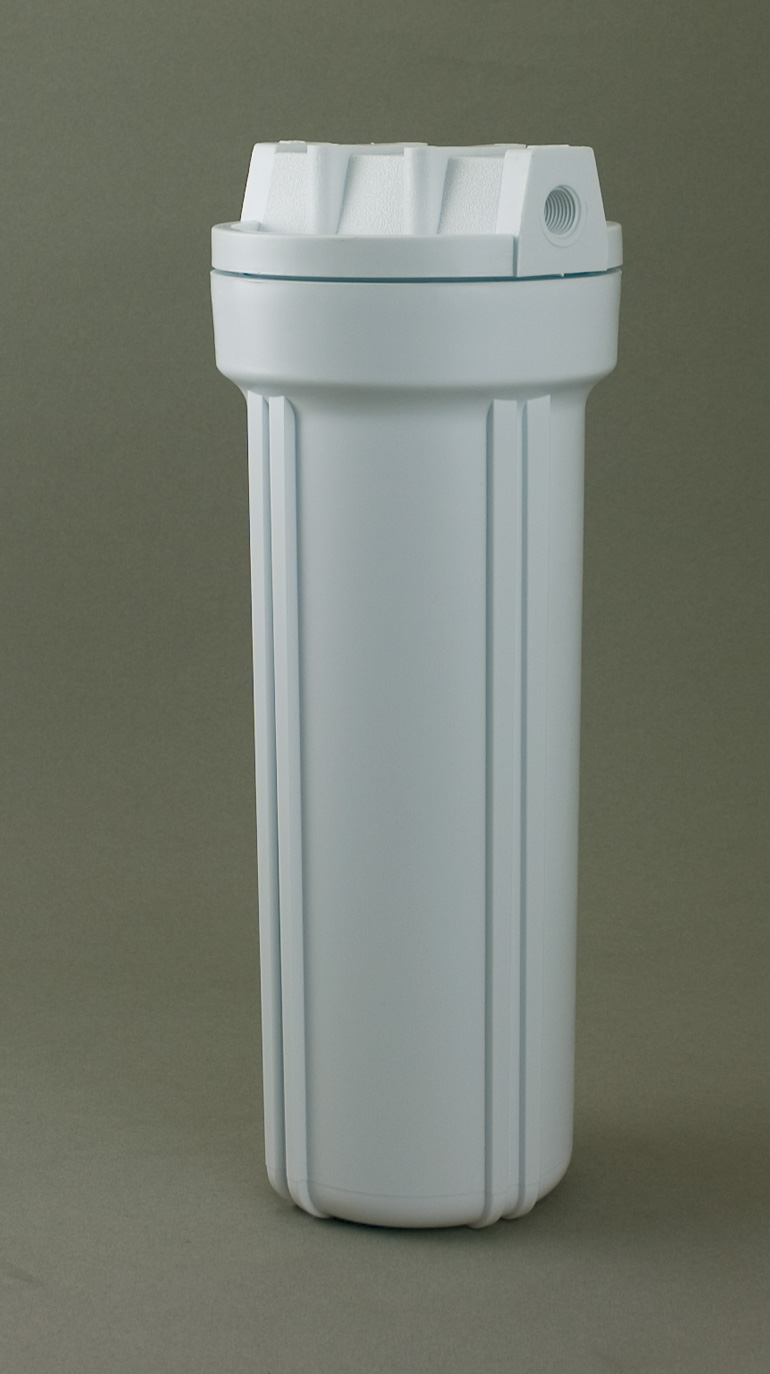
This article addresses cartridge change for water filters and reverse systems with standard filter housings, like those pictured below.  If you have a proprietary (unique) system like Aquasana or Multipure,  you’ll have to figure out how to get the unit apart, but the rest of the instructions apply in a general way.

Some things that you’ll want to have on hand before you start, in addition to the replacement cartridges: a filter wrench, if needed, replacement O rings (though you may not need them), and silicone lubricant, though you won’t need this, either, if the O rings seem sound and sufficiently lubricated.  Also, a pan or, better, a towel to catch drips. A flashlight to look for leaks is also nice to have.

To start, turn off the water that goes to the water filter and lock open the faucet.  If no water is coming out of the faucet, it’s safe to open the housing to change the cartridge.  With reverse osmosis units you need also to turn off the valve on top of the storage tank.  (If your RO unit has no shutoff valve on the tank, you’ll have to let all of the water drain out of the tank.  While it’s draining, you’ll have time to reflect on the folly of buying the cheapest RO unit you could find.)

With the countertop housing shown above, the sump (the long part of the housing) sits on top of the base.

Next, open the filter housing(s).  The long part of the housing, called the sump, screws off of the short part (the cap for undersink units, the base for countertop).  Turn it counterclockwise to remove it. You should have a filter wrench to make the job easy.  Countertop units are often hard to get apart because they aren’t stabilized on a bracket and the wrench doesn’t help.  The best strategy with stubborn countertops is to make opening the housing a two-person job, each person using both hands on one part, the cap or the sump. With multi-cartridge units, it’s a good idea to remember, or even mark for future reference,  the order that the sumps are arranged in so that you can keep the filters in proper order.

Standard undersink housing. The cap is on top and the bottom part, the sump, screws off counterclockwise.

<

Remove and replace the cartridge(s).  Except for “candle-style” filters like Doulton, which screw into the cap/base of the housing,  cartridges will fall out of the sump when you dump the water into a sink.  It’s a good idea with some cartridges to notice which end goes into the sump first  With others it doesn’t matter. With most radial cartridges (like carbon blocks), both ends of the cartridge are open and there is no up or down to worry about.  With most axial cartridges (like hard-shelled “media” cartridges that contain granular media), up and down do matter.  As a general rule, with hard-shelled cartridges there will be only one end gasket:  if that’s the case, point the gasket end toward the base or cap.  With axial cartridges, if you get it backward, no water will come out when you turn the filter on.  Before replacing the cartridge, it’s a good idea to examine and replace, if necessary, the sump O ring that makes the seal between the cap and seal. This is also a good time to lubricate the O ring with silicone grease if necessary. 
Reassemble the unit by replacing the sump onto the cap or base. Be sure the cartridge is aligned in the center of the sump before you tighten.  Do not over-tighten.  In most cases, hand tight is fine.  If it leaks, you can always give it a final twist with your filter wrench later. 

With filters, you are essentially finished at this point.  With the ledge faucet still open, turn on the water and watch for leaks.  You’ll hear the hissing and gurgling of air being expelled from the unit.  This is normal.  Let the water run from the open faucet for three or four minutes to rinse the new cartridge(s) and allow air to escape while you check for leaks.  Water may appear milky for awhile, even after rinsing.  This is caused by air still trapped in the unit.  It’s nothing to worry about, and it will work its way out eventually.

With RO units, you’re not through yet.  After you’ve turned on the water, listened to some hissing and gurgling, and determined that there are no leaks, open the valve on top of the storage tank and let all the water run from the tank through the faucet. (Since the inlet is on and the unit is making water, when the tank is empty you’ll still have a trickle or a fast drip coming from the faucet.  This is the water the unit is making in real time.) The tank should feel light and empty.  If it doesn’t empty completely, you need to add air to the tank.  (Go here for tank instructions.)  When the tank has emptied, close the faucet and let the unit begin collecting water in the tank.  You can use the water at any time, but you won’t have a lot of water for a few minutes.  If your RO unit has no tank valve and you’ve emptied it previously, you’ll have to let the tank fill completely, then empty it again completely to rinse the final filter.  While it is emptying, remind yourself again to pay a bit more for a unit with a tank valve the next time around.

Greenpeace Accuses Authorities in India of Diverting Water from People to Power Plants


Greenpeace has charged that in drought-plague Maharashtra, the state government diverted water to thermal power plants in scarcity regions.  Water being released from dams, Greenpeace says, is going to power plants when it should be going to people.

The state government said in a government resolution of January of 2013 that water from big, small and medium projects should be reserved only for drinking water, keeping the acute scarcity in mind. Greenpeace believes that this promise is not being carried out.  The area is experiencing the worst drought in 40 years. Many areas report zero storage. 

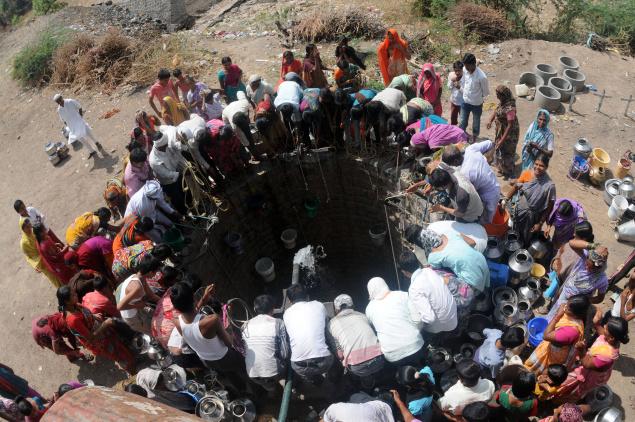
In the picture above, a government tanker pours 20000 liters of water into the well at Arvi village in Beed district of Maharashtra. As soon as the tanker arrives to empty the water in a well hundreds of villagers rush to fill vessels for household use. 

Energy production is a high consumer of water.   In the power plants of the region, to generate one MW of coal based power, 4,000 to 5,000 liters of water are needed per hour.

Greenpeace has called for a cumulative water impact assessment in the river basins of the state,  a halt to diversion of water in the meantime, and eventually an energy policy which is less water intensive.  Power plant officials point out that they are doing all they can to recycle and conserve water and that power, too, is essential to the region.

Reference source: The Hindu.

Formaldehyde as a Water Contaminant


Although formaldehyde has scary connotations, mainly because of its long-time use as an embalming fluid, it is currently an unregulated substance. Ironically, the most common source of formaldehyde in drinking water is from water treatment.  As is most often the case with chemical contaminants, activated carbon filtration is the best way to remove it.  Here is an in-a-nutshell view of the chemical from the Pure Water Products contaminant list. 

Formaldehyde is a naturally occurring chemical used in the manufacture of other chemicals and in cosmetics, fungicides, fabrics, embalming fluids, wood resins, carpeting, and some cleaning products.

The most common route of human exposure is through inhalation, especially inhalation of cigarette smoke and fuel exhaust,

Formaldehyde is a common ingredient of embalming fluids.

but it can also arrive through food packaging and cosmetics. According to the World Health Organization, it arrives in drinking water most commonly as a byproduct of water treatment involving ozonation or chlorination.

Health Effects of Formaldehyde

Exposure to large amounts of formaldehyde can cause skin irritation. In animal studies, long term exposure to ingested formaldehyde was shown to cause incidences of weight loss and damage to the stomach and digestive system.

The International Agency for Research on Cancer reports that there is “sufficient evidence” that formaldehyde is carcinogenic to humans, but by inhalation rather than ingestion. According to the WHO, drinking-water exposure to formaldehyde is not likely to cause cancer:


The weight of evidence indicates that formaldehyde is not carcinogenic by the oral route.


Water Treatment for Formaldehyde

According to the WHO, formaldehyde levels may be reduced with granular activated carbon (GAC) or through changes in disinfection methods.

Sources: EPAWHOIARC, Photo: WikiMedia, author: Unknown


 State-of-the-art UV System Will Offer Protection from Cryptosporidium

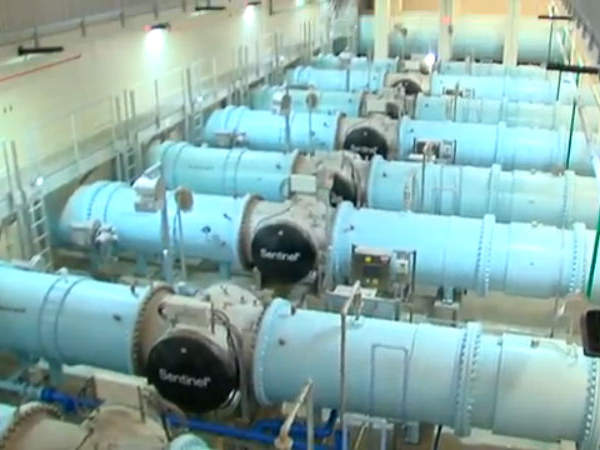
The Greater Cincinnati Water Works has installed ultraviolet technology in its water treatment facility.

After 10 years and $30 million dollars, the new UV technology process puts Cincinnati on par with some of the top water systems in the country.  The UV lights, which are housed inside massive pipes, will disinfect 40 million gallons of water a day.


Eight Calgon Carbon Sentinel® 48” Chevron UV reactors will have the capacity to treat up to 240 million gallons of drinking water per day.

(more…)


 Water is God’s Gift,  but Pumping Costs Money 

 An Editorial from WaterWorld


I was reading an article recently about the flap in Chicago over the city’s plan to phase out free water services to local nonprofits, including religious institutions. An interfaith group held a press conference to oppose the change, claiming that having to pay for water might divert funds from vital social services they provide throughout the city.

I thought it was much ado about nothing, but what caught my eye was a comment from Cardinal Francis George claiming they shouldn’t be charged because water from Lake Michigan was a “gift from God.”

“It wasn’t owned by the city or invented by the city,” he was quoted as saying. Later, he was quoted as jokingly commenting, “We feel sometimes we should charge the city for using our water.”

I really felt a tremendous urge to reach through the Internet and slap said cardinal upside the head. “Your brain was a gift from God. Why not try using it?” I shouted at my computer screen.

As background, Mayor Rahm Emanuel cut the exemption that gave churches free water in December 2011. He initially planned to charge them a growing percentage of the cost of water services that would rise through 2014, when nonprofits would pay up to 80 percent of their water bill. He recently proposed a new system that would charge nonprofits for water based on their assets. Those with net assets under $1 million would be exempt from paying for water, while nonprofits with more than $250 million in assets would pay the full charge. Those in between would pay a discounted rate.

As we all know, providing water service carries a hefty price tag in this time of aging infrastructure and tight city budgets. I found it surprising that a city the size of Chicago would even consider providing free or reduced price water to any organization. I saw one estimate that the program costs the city about $20 million a year.

In a statement, Tom Alexander, the mayor’s deputy communications director, called the asset-based compromise “a fair, reasonable proposal that will allow all nonprofit institutions the chance to continue providing their vital community services while paying their fair share, just as residents do.”

I’m sure many people in the water industry have dealt with dummies who think that water should be free. But as we all know, customers are not paying for water; they are paying for the service to treat and deliver it.

In the small world category, I read the Chicago article as I was researching an article on the value of water to the U.S. economy. You can see the article in this issue. Placing a “value” on water is one thing. Determining a fair price for clean, safe water delivered to a home or business is an entirely separate issue. Communicating that difference to your customers is key.

And when someone says that water should be free, you can tell them it is. “Grab a bucket and run down to the lake. Take as much as you want. I won’t charge you a dime!” 

Source: WaterWorld

Pure Water Gazette Fair Use Statement

Waterborne microbial disease still the greatest risk to water supplies

By Joseph Cotruvo

Water News in a Nutshell.

In a Nutshell: Since the 1974 implementation of the Clean Water Act the number of waterborne ailments has declined, but the portion of  these attributable to distribution system contamination has increased. Legionella serves as a prime example of  the fact that nature is always evolving and creating microbial hazards. Water treatment to control microorganisms should  be given top priority over ” . . .hypothetical risks of trace chemical contaminants that get a lot of publicity and lead people to spend money on bottled water because they think it is safer.”

Rehabilitation prevents leaks and breaks where inoculation and accumulation occur

Traditionally, most microbial waterborne diseases in the United States are gastrointestinal and short-term, self-resolving infections. They can include bacterial pathogens, enterovirus, rotavirus, norovirus and hepatitis A virus, or protozoa like Cryptosporidium and giardia.

Legionella pneumophila

Although detecting waterborne disease outbreaks is difficult, and numbers are underestimates, reported waterborne disease outbreaks in the United States have declined since implementation of the 1974 Safe Drinking Water Act. The range is from a high of 90 reported outbreaks in 1979-1982 to fewer than 10 in 2002, out of about 60,000 community water systems. In addition, surveillance for outbreaks is today better than in the past, and identification of the causative microbial pathogens has significantly improved.

The reduced outbreak incidence is probably attributable to EPA requirements for microbial quality monitoring and increased water treatment that involves filtration and disinfection of surface water and disinfection of groundwaters. However, while the number of waterborne outbreaks has declined, the portion attributable to distribution system contamination has increased.

In the public eye

Beginning in 2001 Legionaires disease was added to the surveillance and reporting system, and incidences of water-related legionellosis are being reported with some regularity worldwide. Legionellosis is a consequence of inhalation of aerosols contaminated with Legionella pneumophila and perhaps other related species.
Legionaires disease gets its name from a 1976 outbreak among attendees at an American Legion convention in Philadelphia staying at a particular hotel. There were 221 reported cases and 34 deaths from pneumonia. It required about six months of intense microbiological and chemical investigations to identify the causal bacterial agent because there was no known culturing technique available for the then unknown strain of bacteria.

The origin of exposure was blow-down inhaled aerosols from an air-conditioning system. The cases indicated that smokers were at greater risk than non-smokers. Speculation as to origin was rampant, and it even included a supposed “theory” involving a relatively exotic chemical that might have been pyrolyzed while smoking cigarettes. I recall hearing a report from a U.S. Senate committee that undertook its own assessment and announced that supposed chemical cause, shortly before the true microbial agent was identified. Apparently politics and science don’t mix very well.

Retrospective investigations revealed that in fact numerous “legionnaires” cases had occurred previously and had not been identified, and that a milder form of respiratory infection called Pontiac fever was not uncommon. Many outbreaks and deaths have been reported since then, especially in hospitals. The U.S. Centers for Disease Control has estimated up to 18,000 legionellosis deaths in the U.S. each year.

What actually happens

Since 1976 it has been determined that Legionella pneumophila are fairly common soil and water bacteria and pathogenic when inhaled, not from ingestion. They grow under low nutrient warm water conditions at temperatures in the range of 25 C to 50 C. So, they can be present in warm to hot water systems, showerheads, humidifiers, misting and cooling water for air conditioning systems and hot tubs. In distribution systems and plumbing they can colonize biofilms where they may be protected from normal disinfectant residuals.

The at-risk populations are predominantly those who are elderly and also persons with impaired immune systems. Hospital environments have been the source of numerous cases of outbreaks and deaths related to Legionella. However, it is apparent that there are high-risk people in the general population; for them even a typical house or building environment could be a risk, and specific diagnoses and determinations of causal origin will be less likely.

There are water system management techniques for reducing patient risks used by many hospitals. They include monitoring their plumbing systems, additional disinfection and periodic shock disinfection or heating. Chlorine, chlorine dioxide and even peroxides and silver and copper are being used, but with some controversy for the latter two. There are several studies that indicate that systems with chloramine residuals have a much lower risk of a Legionella related outbreak than those with free chlorine residuals. The rationale is that although chloramines are less potent than free chlorine, their lower chemical reactivity allows them to more effectively penetrate biofilms that may harbor the Legionella.

Other recommendations include maintaining hot water systems above 50 C to reduce growth of the microorganisms, but the dilemma is that temperatures in the 55 C to 60 C range introduce a scalding risk, especially for children and seniors.

Moral of story

The law of unanticipated consequences is still functioning. The benefits of modern warm controlled housing environments, air conditioning and indoor hot water plumbing can have downside consequences. Even those beneficial societal technological advances can provide an opportunity for otherwise innocuous microbes to proliferate and cause disease and death.

The moral of the story is that nature is always evolving, and there are perverse unidentified microbes out there that can harm us. Water treatment to control many microorganisms, not just E. coli, is essential, and waterborne microbial disease is still, and always will be, the greatest risk from public drinking water supplies. Aging water distribution systems require aggressive rehabilitation to prevent leaks and breaks where inoculation by microorganisms and accumulation in biofilms can occur. Replacing that aging infrastructure is a much greater national priority than the hypothetical risks of trace chemical contaminants that get a lot of publicity and lead people to spend money on bottled water because they think it is safer.

Source:  Processing.

Gazette Fair Use Statement

Alcoa completes first engineered wetlands wastewater treatment system in Saudi Arabia

Water News in a Nutshell.

 by Justine Coyne

 In a Nutshell:  Using technology known as “Natural Engineered Wastewater Treatment,”  Alcoa has established in Saudi Arabia an innovative wastewater reclamation system that mimics the physical, chemical and biological processes of natural wetlands.  It saves lots of money and 2 million gallons of water per day.


Aloca Inc. and The Saudi Arabian Mining Co. (Ma’aden) announced the completion of its engineered wetlands wastewater management system in Saudi Arabia on Tuesday.

The first-of-its-kind system will reduce water demand by nearly 2 million U.S. gallons per day and is expected to save more than $7 million annually that would otherwise be spent purchasing fresh water.

“This innovative waste management system demonstrates the value of combining Ma’aden’s local knowledge and expertise with the technological depth and sustainability leadership that Alcoa brings to the Ma’aden-Alcoa joint venture,” the executive vice president and chief technology officer for Alcoa said in a statement.

Alcoa’s wetlands system comprises three steps including (1) an anaerobic treatment tank which breaks down and separates organic material in the water; (2) a passive engineered wetland that utilizes vegetation for further treatment of organics and removal of nitrogen and metals; and (3) a cell housing bauxite-based technology that disinfects and polishes the water.


The technology, which was designed and engineered at the Pittsburgh-based Alcoa Technical Center, collects sanitary and industrial wastewater and cleans the and disinfects the water without the use of chemicals or the creation of water discharge and odors associated with conventional tank systems.

The water will then be reused in the manufacturing process and for irrigation at the Ma’aden-Alcoa aluminum complex at Ras Al Khair. The complex includes a refinery, smelter and rolling mill.

“(Sustainable Development is) a critical component of our operating excellence that will enable Ma’aden Aluminium to become the world’s lowest-cost producer of primary aluminum, alumina and aluminum products, with access to growing markets in the Middle East and beyond,”  the  president of Ma’aden said in a released statement.

The technology, known as a Natural Engineered Wastewater Treatment system, was developed to mimic the physical, chemical and biological processes of natural wetlands.

The project is expected to be fully operational by the end of July and the technology is being considered for other wastewater treatment applications throughout Saudi Arabia.

Source: Pittsburgh Business Times.

Gazette Fair Use Statement


Benzene, mercury, chromium and arsenic, were improperly stored at the Riverside Industrial Park

 In a Nutshell: The EPA has declared the Riverside Industrial Park in Newark, NJ a Superfund Cleanup Site in response to a spill that occurred in 2009.


The Environmental Protection Agency  has added the Riverside Industrial Park in Newark, N.J. to the Superfund National Priorities List of the country’s most hazardous waste sites.  After a 2009 spill of oily materials from the industrial park into New Jersey’s Passaic River, the EPA discovered that chemicals, including benzene, mercury, chromium and arsenic, were improperly stored at the site.

The agency took emergency actions to prevent further release of these chemicals into the river, the additional investigation showed that soil, groundwater and tanks at the site are contaminated with volatile organic compounds and polychlorinated biphenyls (PCBs).

EPA proposed the site to the Superfund list in September 2012 and  held a 60-day public comment period.  After considering public comments and receiving the support of the New Jersey Department of Environmental Protection for listing the site, the EPA is putting it on the Superfund list.

“The EPA has kept people out of immediate danger from this contaminated industrial park and can now develop long-term plans to protect the community,” said Judith A. Enck, EPA regional administrator. “By adding the site to the Superfund list, the EPA can do the extensive investigation needed to determine the best ways to clean up the contamination and protect public health.”

Read the entire press release here.

Source:  EPA

Gazette Fair Use Statement

Earth set to face ‘severe’ self-inflicted water woes within 2 generations

Water News in a Nutshell.


In a Nutshell:  Leading water researchers meeting in Bonn issued a severe warning that unless current trends are reversed severe water shortages will affect “most of the 9 billion people on Earth” within just one or two generations. 

Washington: Leading water scientists have issued a warning that in the short span of one or two generations, most of the 9 billion people on Earth will be suffering from fresh water woes if any major reforms are not made.They said that this handicap will be self-inflicted and is entirely avoidable.

“Mismanagement, overuse and climate change pose long-term threats to human well-being.”

The researchers bluntly pointed to chronic underlying problems led by mismanagement and sent a prescription to policy makers in a 1,000-word declaration issued at the end of a four-day meeting in Bonn, Germany, ‘Water in the Anthropocene,’ organized by the Global Water SystemAfter years of observations and a decade of integrative research convened under the Earth System Science Partnership (ESSP) and other initiatives, they said that they are more than ever convinced that fresh water systems across the planet are in a precarious state.Mismanagement, overuse and climate change pose long-term threats to human well-being, and evaluating and responding to those threats constitutes a major challenge to water researchers and managers alike.Countless millions of individual local human actions add up and reverberate into larger regional, continental and global changes that have drastically changed water flows and storage, impaired water quality, and damaged aquatic ecosystems.  Humans are a key feature of the global water system, influencing prodigious quantities of water: stored in reservoirs, taken from rivers and groundwater and lost in various ways.

Additional deterioration through pollution, now detectable on a global scale, further limits an already-stressed resource base, and negatively affects the health of aquatic life forms and human beings.

Given the development imperatives associated with all natural resources at the dawn of the 21st century, we urge a united front to form a strategic partnership of scientists, public stakeholders, decision-makers and the private sector.


Source:  Zee News.      More Information:  The Guardian.

Gazette Fair Use Statement

Canada Is Way Behind Most Countries in Wastewater Treatment

Water News in a Nutshell.


In a Nutshell:  Although Canada has recently enacted changes to its antiquated wastewater treatment systems, a leading clean water advocacy group calls it one the “most backward countries” when it comes to dealing with sewage.  Until very recently, Canadian law required only the most basic wastewater treatment.

Canada’s methods of wastewater treatment are old-fashioned, ineffective and nothing short of a national embarrassment, according to Mark Mattson, head of Lake Ontario Waterkeeper, an organization that seeks to promote clean and safe water.

Speaking in an interview with Global News, Mattson stated that Canada is one of the “most backwards countries” when it comes to wastewater treatment. For many years Canadian municipalities were required to ensure primary treatment of wastewater only, meaning that they had to remove solid waste from water. This meant that liquids such as cleaning products and some drugs that people disposed of in sewers were not cleaned. The method was applied in the majority of municipalities until new regulation was accepted last year.

According to Darrell Mussatto, North Vancouver Mayor, the type of treatment previously adopted could remove 70 percent of the suspended solids. Despite the fact that big cities like Vancouver have a serious wastewater issue and although technology has developed dramatically, until recently the authorities believed that water diluted and assimilated waste, so the problem was solved. Mattson has argued that this was wrong and leaving waste in drinking water supplied to communities untreated was absurd.

Measures to change the situation were taken in 2012, when new federal regulations were put in place. Under the new rules, primary treatment was not enough and further treatment processes had to be implemented. As a result cities are now required to use secondary wastewater treatment and remove bacteria and other things that have dissolved in wastewater. By comparison, secondary wastewater treatment standards have been implemented in the United States for nearly four decades, Global News said.

Mussatto explained that authorities and treatment plants were aware that wastewater needs to be better treated before it is allowed to reach end consumers. Since regulations are now in place, plans are being drawn up to achieve this, he added.

Compliance with the new rules presents cities with huge bills for upgrades and new equipment. Vancouver, for instance, must upgrade two of its five treatment plants and has to spend CA$1.5 billion to do so. There is no way the city can cover these expenses itself unless tax rates are drastically increased, Mussatto claimed.

Cities are expected to comply with the new regulations by 2040 but many of them are struggling to come up with possible ways to fund their upgrades. Toronto, which discharges billions of liters of raw sewage and storm water into Lake Ontario every year, also faces this problem. Michael D’Andrea, Toronto’s director of water infrastructure management, explained that the city was one of the 43 regions classed as “polluted areas of concern in the Great Lakes basin,” with the pollution problem linked mostly to the city’s combined sewer overflows. The older areas of the city are serviced by combined sewers, which carry different types of waste, such as raw sewage and storm water, in one single pipe, he said.

Source: Processing Magazine.

Gazette Fair Use Statement