



Water News for July, 2026

4th of July Special: Fireworks are Powerful Contaminants of Water
Three recent studies published in American Chemical Society (ACS) journals examined what fireworks leave behind, from discarded debris and airborne particles to chemical compounds released into the atmosphere. Fireworks debris alters water chemistry. Once fireworks burn out, they leave behind more than ash. Spent firecrackers scatter residue that contains partially burned fuel, metal salts, additives, and pieces of charred packaging. (Science Daily)
New Orleans is Sinking Faster Than Predicted
A new study has shown that New Orleans is sinking due to the climate crisis and that it has already hit a “point of no return.”
Water Quality Association States Opposition to Trump EPA’s Loosening of PFAS Standard
WQA issued comments opposing rescinding requirements for PFHxS, PFNA, GenX and certain PFAS mixtures without a scientifically supported basis. The comments emphasized that reversing the rules could create inconsistent treatment requirements, regulatory uncertainty and a patchwork of state standards that complicates communication and limits equal protection for consumers nationwide.
WQA remained neutral on extending the PFOA and PFOS compliance deadline but highlighted that the industry already offers certified point-of-use and point-of-entry treatment products capable of meeting or exceeding current requirements. These technologies provide an immediate, practical and cost-effective option for reducing PFAS exposure while supporting public health. (WQA Press Release)
The Dire Predictions for Lake Powel Get Even Worse
Experts say the critical reservoir system is careening toward a breaking point as the US west’s climate warms and dries. Lake Powell, US’s second-largest reservoir, threatens to plunge to unprecedentedly low levels this year after a historically bleak snowpack failed to raise its water level, scientists and water experts have said, adding renewed urgency to stalled talks over how to conserve a water source depended on by tens of millions of people in the US south-west. (The Guardian)
Whitefish Disappearing Rapidly from the Great Lakes
The Great Lakes’ most emblematic fish is rapidly becoming history because of “. . . the proliferation of quagga and zebra mussels, which now carpet entire lakebeds for hundreds of miles in any direction.” (The Guardian)
Backlash Against Data Centers Growing
The is a growing nationwide backlash against the construction of resource-hungry datacenters, which opponents say place unbearable demands on local water and energy supplies. According to Data Center Map, the US has almost 4,500 datacenters, some consuming up to 300,000 gallons of water each day, equivalent to the demands of about 1,000 households. (The Guardian)
Nanoplastics in Water Don’t Just Contaminate the Environment: They Sustain the Growth of Harmful Bacteria
Tiny plastic particles in drinking water may be doing more than contaminating the environment. New research suggests nanoplastics can actually help harmful bacteria survive by strengthening the slimy biofilms they form inside water systems. These tougher biofilms become more resistant to disinfectants, making them harder to remove and potentially increasing public health risks. (Virginia Tech)
The San Carlos Reservoir Has Almost Vanished
A historic lack of snow in the Gila River watershed has left Arizona’s San Carlos Reservoir less than 1% full, triggering a massive fish kill and an indefinite closure. Despite the bleak conditions, heavy summer rains could help the reservoir rebound. (Science Daily)
Building a Wall Requires Water–A Lot of It
Residents of southern New Mexico are complaining about water shortages caused by border wall building activities recently resumed by the Trump administration. Wells are going dry because of extensive pumping to support wall construction. New Mexico has strong protective laws that require permitting to draw groundwater, but the federal government has declared itself immune to regulation and is pumping vast amounts of water in arid regions without a state permit. (NPR)
Overuse of Water Fuels Climate Change: Here’s How
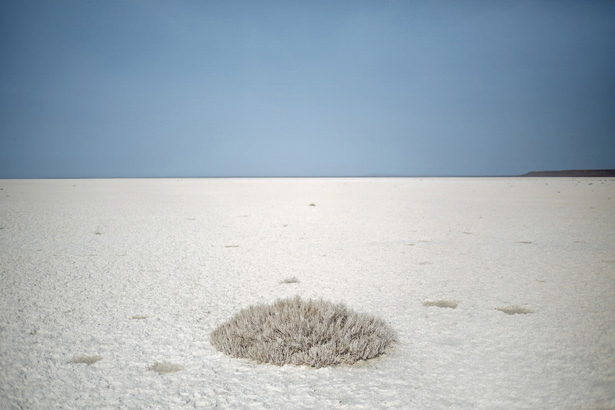
The Aral Sea Today after the Soviet Union diverted the flow of rivers to irrigate cotton farms
The Aral Sea sits between Kazakhstan and Uzbekistan and was once the fourth-largest inland body of water on Earth. For the past 60 years, though, humans have bled it nearly dry irrigating cotton crops, leaving behind a salty plain the size of Ireland. Its loss has long been seen as an ecological and humanitarian problem, but new research shows that it has also been a significant driver of climate change.
Over the years, carbon collects at the bottom of lakes. If the water dries up, carbon in the dry lakebed becomes a source of atmospheric pollution. Only recently have scientists begun to understand the significance of the release of carbon from dried lake beds as a driver of climate change. In fact, the figure is staggering. Between 1960 and 2022, scientists found, the Aral Sea had pumped a remarkable 748 million metric tons of carbon dioxide into the atmosphere. That’s three times the annual emissions of Spain. Read the full story in Grist.
Along the Odet River in Brittany, volunteers are catching hundreds of trout and young salmon – not for sport but to save them. Fish being moved to oxygenated flowing water further downstream as water levels drop across the country. (The Guardian)
Microplastics, according to the National Oceanic and Atmospheric Administration, are small pieces of plastic less than 5 millimeters long that come from sources such as larger debris that degrades down, or microbeads found in certain health beauty products like body wash.
Researchers and local volunteers sampled water from 77 North Texas waterways, including the Trinity River, White Rock Lake and Mountain Creek Lake. According to the findings: “The overwhelming majority of sites contained plastic fibers.”
The report says microplastics can be a threat to the health of wildlife and humans. “This is a serious physical hazard. These plastics can cause suffocation and gut blockage, and animals that ingest too much plastic can starve.” Denton Record-Chronicle.

