



Theory of Global Warming Formulated in Oklahoma by Gene the Bean
by Gene Franks
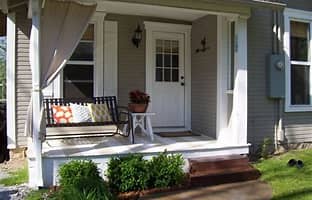
Sometime around 1948, when I was almost ten years old and was still known to friends and family as Gene the Bean, I put forth the theory of Global Warming.
My family home in Okemah, OK was only two lots off of the three-service-station intersection of red brick North 4th St. and the very busy black-topped Highway 62–the highway that carried all the traffic between Oklahoma City and Ft. Smith.
When I sat on the south porch of the house in summer, it was hot.
My grandfather lived nine miles north on a seldom-traveled gravel country road that ran the mile that separated Last Chance and Morse (combined population of about 75). On hot summer days when I visited my grandfather and sat on his south-facing porch, it was cool and breezy.
It did not take my nine-year-old brain long to figure out that when you’re in a place where the breeze blows through pastures, thickets and big shady trees, a place where there are no cars and trucks in sight, it’s a lot cooler than when you’re in a place where the breeze is blocked by houses and greasy service stations and the sun’s heat is being soaked up by red bricks and black pavement and there is a steady stream of cars and trucks with heat-belching exhaust pipes. That’s when I made my prediction that as more and more cars and trucks come on the scene, and we cut down more and more trees and thickets, and we pave more and more of the land, the warmer the world is going to get.
I formed that theory without computer models or sophisticated analytical equipment, proving that “you don’t need a weatherman to know which way the wind blows.” It was my theory, and I’m sticking with it.

