

How Fracking Works


Posted January 5th, 2014

Fracking 101: Breaking down the most important part of today’s oil, gas drilling

by Sharon Dunn

 Editor’s Note:  A survey taken in 2013 showed that although the oil production practice called fracking has stirred up a storm of controversy in our country the majority of Americans have little or no idea of what the practice itself consists of.  We’re reprinting this article from The Greeley Tribune in an effort to remedy this ignorance. — Hardly Waite.

Fracking, the two- to three-day process of hydraulic fracturing for oil and gas, is perhaps one of the most misunderstood drilling practices, becoming as bad of a word in some circles as a racial slur.

Entire countries have banned the process. Some Colorado towns have placed moratoriums to study it further.

Environmentalists storm capitals over it, demanding increased regulations, and oil and gas company employees and officials scratch their heads — they’ve been using the same process in oil and gas drilling for 60 years without widespread incidents.

“It’s a perplexing issue,” said Collin Richardson, vice president of operations for Mineral Resources Inc., who opened up
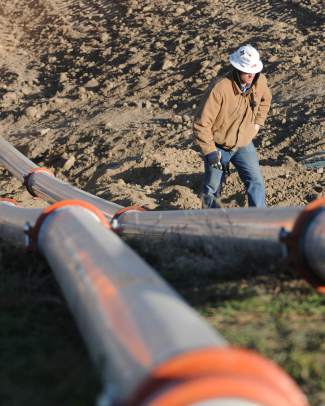
Huge pipes lead down a hill to provide water to a fracking site.

a company fracking job last fall to a student tour from the University of Northern Colorado. “People go to a light switch and expect energy to be there, but they don’t think about where it comes from. I don’t think most people understand that without hydraulic fracturing, we wouldn’t have natural gas to provide electricity to our homes or gas in our cars.

“There’s a gross misconception, and extreme environmentalist groups have been able to get ahold of people’s emotions and twist facts and present false evidence. That’s what it’s all about.”

A recent study by researchers at Oregon State, George Mason and Yale universities revealed that more than half of the 1,000-plus people surveyed across the nation had no idea what fracking was, and almost 60 percent had no opinion on it.

In recent years, combining hydraulic fracturing with horizontal drilling is what has allowed for the oil and gas revolution that many in the industry say will pull America away from the Middle East in terms of long-term resources and energy independence.

It’s important to understand that fracking is a small part of a much larger operation to get oil and gas from a mile below the surface into storage tanks for market.

Fracking takes about two to three days in what is roughly a 10- to 14-day process of drilling and completing a well.

“Fracking is one of the important parts of this,” said Leen Weijers, vice president of technology and sales for Liberty Oil Field Services, a private contractor that fracs wells for oil and gas exploration companies.

Fracking has always been a part of drilling. The new part of the process is horizontal drilling.

“People don’t equate drilling with fracking,” Richardson said. “I don’t think most people understand if you ban fracking, you effectively ban drilling.”

Starting a well

Companies start the drilling process on about a 3-acre pad of land, which allows for the many trucks that become part of an oil and gas drilling process.

The process begins with vertical drilling. A drilling rig is brought on site to drill the well, which will go to depths of up to 10,000 feet below the surface. This process can take from a week to 10 days, depending on the site.

Drilling stops initially below the water table so the well can be encased in cement to prevent anything from the well leaking into the water table. Once the casing is completed, a 7-inch drill bit will drill more than a mile to get to the formation in which to frac, usually the Niobrara or Codell formations, both stacked beneath several impermeable rock formations. Once the drill bit hits bottom, or the “pay zone,” the company will drill what is called the “bend,” which is the curve the well takes to get into the horizontal portion of the zone. The bend alone could take up to two days to drill.

Throughout the drilling process, drilling mud is pumped in to cool the drill bit and act as a means for the resulting debris to leave the well.
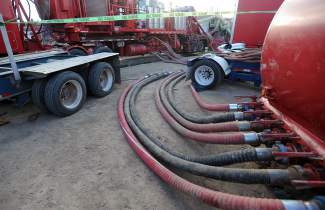
Up to twelve semi trucks all running together provide the horsepower to the wellhead for the fracking process.

The horizontal portion of the well then is drilled for an additional 4,000 feet to 10,000 feet, then encased in cement, with a 4-inch metal pipe in the center to allow for the oil and gas to flow to the surface. At this point, the well is just a hole drilled into the ground, with a cement barrier between the pipe, the formations and water table.

The rig is packed up and activity stops until fracking is scheduled. Sometimes it can wait for weeks before a fracking crew is able to get there. Sometimes it takes a couple of days.

Fracking

The actual fracking process uses a lot of machinery capable of driving the fluid down more than a mile, and a lot of science to calculate the exact mixtures of everything from chemicals and water and sand to the pressure it takes to crack tiny little fissures into rocks, more than a mile beneath the surface.

Sand, water and chemical additives are pumped into the well at high pressures, so as to crack the rock in different stages in the horizontal (parallel to the surface) portion of the well.

“To open fractures at bottom-hole pressures in the Niobrara, you probably need downhole pressures of 10,000 psi or so to open the rocks,” Weijers said.

The chemicals do not erode the rock to create the cracks or fracs — it’s the high pressure of the water that opens them up. The chemicals, such as guar gum, which also are in many foods we eat, are added to help the water to gel, allowing the sand an easier vehicle in which to move.

“When it’s thicker, it does a better job of carrying sand downhole,” Weijers said. “If you think about a handful of sand at a lake, and you put it in water, the sand will settle quickly to the bottom of the lake. We don’t want that to happen in factures.”

Those cracks, now held open by the tiny kernels of sand, release the trapped oil and gas inside, which flow back to the surface after the downward pressure from fluids is released from the well.

Soap ingredients also can be added to the gel to prevent bacterial growth in the well. If bacteria forms, it could release deadly gases.

“You put a lot worse stuff in your food, your yard, or your garden,” Richardson said. “A lot of the chemicals are used to clean your counters, and put in your make-up.”

Many involved in the process describe frac fluid as “slime,” like the stuff kids play with from the local toy store.

The Layout

To handle the sand, water, chemicals and production that comes out of the well during the fracking of the well (commonly called flowback), the site needs have the basics: Trucks, trucks and more trucks to carry the water, the sand, and the chemicals to mix them all together, and more truck horsepower to combine it all to shoot down through a pipe into an 8-inch hole in the ground.

To prep the area, several 500-barrel tanks for water storage or a massive, 40,000-barrel pool to store water is erected on the periphery of the site. Sand storage tanks arrive, then are filled. A typical frac job will utilize from 1.5 million to 6 million pounds of sand.

Iron trucks carry massive amounts of pipe that will be used to keep the well opened and separate from the well.

“When the rest of the crew arrives on location, they’ll typically rig up to the well head with a missile,” Weijers said.

The missile is a manifold around which most of the activity centers, to ultimately pump fracking fluid downhole. Crews will line on each side of the missile five to six semi trucks, which contain the horsepower to create enough pressure to pump the fluid downhole at the proper rate.

In addition to the horsepower trucks, there are sand trucks and trucks containing the chemical additives to thicken the water to keep the sand moving in the well.

A hydration truck, through which the chemicals are added to the water to “gel,” and a blender, which mixes that fluid with the sand, are nearby. All surround the missile in a horseshoe shape.

“The blender sends the mixture of sand water to the low-pressure side of the missile,” Weijers said. “From that missile, we have 10-12 connections to the individual horsepower units, which really pressurize the mixture of sand and fluids so the (missile) can send it (through its high-pressure side) downhole at pressures that can crack the rock open.”

That one process is good for one frac, or stage, at which the horizontal well is cracked from being hit at such high pressures.

A typical well can have 20 fracs, each necessitating this procedure of blending, pressurizing and cracking. A typical frac job can last up to 20 hours — one frac stage per hour — from start to finish.

At the open end, or the top of the horseshoe, is a data center, or a trailer containing about five to six people controlling the science of the job. There’s usually a representative or two from the oil and gas company, a frac job supervisor and an engineer to do the calculations.

“Typically, there’s an engineer who makes the readings of the pressure,” Weijers said. “There’s hundreds of parameters being tracked, all the chemicals, the proppant (sand) being pumped, pressures during the job. The engineer makes it possible to track that and do scientific calculations of the data.”

Here, employees track every aspect of the job, from pressures of the frac fluid to the diesel engine’s fuel gauges.

At various other open areas, there will be containers in which the used sand and production waters are placed into once they fulfill their purpose in the wells to be hauled off later for recycling, injection or disposal.

On jobs where crews utilize a large pool of water, the water is usually being heated to temperatures of about 70 degrees to provide the perfect chemical combination with the additives and sand.

At some point in the drilling and completion process, crews will build oil and gas storage tanks, vapor recovery units to control air emissions, and oil and gas separators for the eventual well production. All will be strategically located around the wellhead.

Completion

Once all the fracs are created, the downward pressure is removed from the well. Within a couple of days, the release of that pressure will reverse, allowing the oil and gas to flow from the rocks and up the well.

“At end of the frac job, the flow stream is reversed,” Wiejers said. “Instead of pumping things downhole, due to the pressure we created, we have almost no pressure at the surface, then the flow reverts and oil and gas and some of the water find their way back from downhole to the surface.”

All the equipment is removed from the site, leaving only the wellhead, the storage tanks, separators and emissions control. Production can last for years.

Source:  The Greeley Tribune.
Pure Water Gazette Fair Use Statement

Study Finds Variability In The Accuracy Of Methods Used To Measure Emerging Contaminants

Environmental Analysis: For chemicals from pharmaceuticals or personal care products, analysis methods may lead to inaccurate measurements or data that are not comparable between labs
By Melissae Fellet


Chemicals from pharmaceuticals and personal care products can travel from the plumbing in people’s homes through municipal water treatment plants and into surface waters. Environmental scientists worry about how much of these compounds land in the environment, because some may disrupt hormone signaling in aquatic life and in people.

But unlike with regulated contaminants, there are no standard methods for the analysis of these compounds in environmental samples. A group of researchers wanted to compare a range of techniques currently used to detect the chemicals to determine the accuracy of those measurements (Anal. Chem. 2013, DOI: 10.1021/ac403274a). They found that for some of the contaminants, the accuracy of analytical methods varied widely.

For the study, Brett J. Vanderford, a research chemist at the Southern Nevada Water Authority, and his colleagues asked 25 research and commercial laboratories in the U.S., Canada, Europe, and Australia to test water samples. The researchers spiked water with known concentrations of different collections of contaminants. They selected 22 compounds to analyze, including the antibacterial agent triclosan, the plastic ingredient bisphenol A, and the semisynthetic hormone 17α-ethynylestradiol. Three different types of water were used in the study: deionized water, drinking water from a treatment plant in Henderson, Nev., and surface water from a bay in Lake Mead, Nev.

Vanderford and his team asked the labs to determine what was in each sample and at what concentration. They told the labs to use whatever methods they pre-reported for environmental analyses. In the end, Vanderford’s group received contaminant concentrations measured with 52 different methods that varied in protocol, calibration, sample preparation, and instrumentation.

The researchers determined the accuracy of the measurements by calculating the percent bias, which represents the difference between the measured concentration and the known amount placed in the sample. For most of the compounds in drinking water, the median bias across the different techniques fell between 15 and 20%. But for some compounds, the range of biases was quite large, indicating that the accuracy of the techniques varied greatly. For example, the anticonvulsant carbamazepine had biases ranging from 1.5 to 2,000% in drinking water.

Other compounds, like bisphenol A, ciprofloxacin, 4-nonylphenol, and 4-tert-octylphenol had a narrow bias range, but the median biases were high—35 to 51% in drinking water and 38 to 59% in surface water. The high biases indicate that those compounds are generally more difficult to analyze, Vanderford says.

Bisphenol-A, 4-nonylphenol, and 4-tert-octylphenol were also prone to detection even if the compounds were not placed in the original water samples. The false positive rates for these compounds were greater than 15%, more than three times greater than the majority of the compounds on the list.

Vanderford says the results reveal the importance of developing standardized analytical methods for measuring contaminants. Based on the findings, the researchers recommend using liquid chromatography-tandem mass spectrometry for analysis combined with isotope dilution for calibration. This combination of methods produced less than 10% bias for most of the 22 compounds studied.

Source: Chemical and Engineering News.

Pure Water Gazette Fair Use Statement

Arsenic: How to Remove It from Water


Posted December 24th, 2013

How to Remove Arsenic from Water

There are many treatment strategies that can be used to reduce arsenic in water.  A Water Conditioning and Purification article (paper issue, Dec. 2013)  listed the following as effective arsenic treatments.  They are listed in alphbetical order, not order of effectiveness.

1. Activated Alumina

2. Coagulation-assisted filtration

3. Electrodeionization

4. Granular ferric hydroxide

5. Ion exchange

6. Lime softening

7. Nanofiltration

8. Reverse osmosis.

Of these, three are by far most commonly used for residential treatment: Activated Alumina, Granular Ferric Hydroxide, and Reverse Osmosis.

This is not to suggest that a home owner can simply get a reverse osmosis unit or an activated alumina filter and assume he has solved the arsenic problem.  Arsenic is potentially life-threatening and it should not be taken lightly.  Treating arsenic is actually fairly complicated, although the basics that you need to consider are these:

In water, arsenic exists as arsenite (As III)  or arsenate  (As V).  The most common is As(V).  Usually if water contains dissolved oxygen and the pH is 7 or above, As(III) will naturally be oxidized to As(V).

Common treatment methods like reverse osmosis, activated alumina, and ferric hydroxide filtration remove As V well but not As III.  Therefore, the usual practice is to use an oxidizer in front of the treatment process to assure that the Arsenic in the water exists as arsenate.   Of the commonly used oxidizers, chlorine, potassium permanganate and ozone work very well.  Also useful is filtration through Filox, which has proven to be an effective oxidizer for Arsenic.

More detailed information on  this topic can be found on the Pure Water Occasional website.


Our Top Ten Products 

by Gene Franks,   Pure Water Products


At near the end of 2013, I took a look to see what our best selling products at Pure Water Products were for the year. Some were predictable, some were surprises, and all point to a moral. I’ll tell you what our top ten sellers were first:

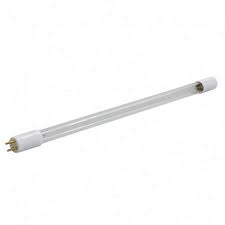
1. UV102. Pura UV Lamp #20. The top-selling product on the list was no surprise. This has been our best selling single item for a number of years. When Pure Water Products started in 1986, it didn’t cross my mind that I was getting into the light bulb business. We sell lots of Pura #20 UV lamps because it is the standard lamp for all Pura plastic whole house UV units, we’ve been selling Pura units since the early 1990s and have lots of customers who need annual replacements, and we have have an all-Pura website (http://www.purauv.com) that is the uncontested best source for Pura plastic units, parts, and information.


2. FC001, MatriKX CTO Plus carbon block filter cartridge, 9.75″ X 2.5″ size. This has for years been our favorite and our best selling filter cartridge. It’s the standard cartridge for our Model 77 countertop filter as well as our Black and White series reverse osmosis units and undersink filters.


3. DC006. WellPro 220 volt control module. This is a best seller we aren’t proud of. It’s a control module for a dry pellet chlorinator. We sell a lot of these because we make them available and most websites don’t, but also because it’s a part that fails often and has to be replaced. This isn’t a big profit item because we also have to handle lots of warranty replacements. The module has an 18-month warranty and a habit of dying before the warranty expires.


4. FC403. MatriKX CTO carbon block cartridge, 4.5″ X 20″ size. We sell lots of these because they’re the standard cartridge in our “compact whole house filters” and because they’re a popular “after market” replacement in Pura Big Boy ultraviolet units.

5. RO001. This is a product we’re really proud of, our Black and White undersink reverse osmosis unit. We build these RO units ourselves and customize them at customers’ requests.

6. FC453. 5-Micron Wound String Sediment cartridge, 4.5 ” X 20″ size. Standard in our compact whole house sediment units as well as Pura Big Boy units. People with high sediment well water go through lots of sediment cartridges.

7. RO200. This is the countertop version of our Black and White reverse osmosis unit. Another product that we build ourselves and modify according to the customer’s request.

8. UV013. The Pura UVBB-3. Pura’s 15 gallon per minute “Big Boy” triple whole house unit, with UV lamp, a sediment filter, and a carbon block filter.

9. DC008. Chlorine Pellets for WellPro dry pellet chlorinators.

10. UV007. Pura UV20-3. Pura’s 10 gallon per minute whole house UV unit, with 2.5″ X 20″ carbon block and sediment filters.

And now for the moral. From a business perspective:

1. What sells best are things that wear out and have to be replaced. Filter cartridges, UV lamps, and chlorine pellets are all things that are used up and have to be replaced.

2. Bad products may be more profitable than good products. This is an unfortunate fact. We’ve all heard of planned obsolescence. I bought a Bose radio a dozen years  ago and except for a few Radio Shack batteries for the remote control, I’ve never had any expense after the initial purchase. The purchase price seemed high for a radio, but it turned out to be a great bargain. Chlorinator modules, on the other hand, cost half as much as my Bose radio and often don’t last through the warranty period. The manufacturer keeps making bad ones because people keep buying them.  It’s a proprietary product–no one else makes one that will fit the chlorinator.


We don’t like this system, but we all seem to be caught in it.  And for General Electric one can see how it makes more sense to purchase very cheap offshore chlorinator modules than to make good ones (as they did a few years ago) that last and last and hardly every have to be replaced.

Sinking Land Brings Calls for Pumping Alternative

 by Neena Satija

Amid a persistent drought, a growing population and a dwindling supply of surface water, much of Texas is searching for underground water resources.

But a large swath of Texas — home to close to one-quarter of its population — is looking for water supplies anywhere but beneath its surface. A century of intense groundwater pumping in the fast-growing Houston metropolitan area has collapsed the layers of the Gulf Coast Aquifer, causing the land above to sink. The only solution is to stop pumping, a strategy that some areas are resisting.

The geological phenomenon, unique to this part of Texas because of the makeup of the aquifer’s clay layers, is known as subsidence. Areas in and around Houston have sunk as much as 10 feet in 100 years, causing neighborhoods to flood, cracking pavements and even moving geologic faults that could lead to infrastructure damage. “It’s an upfront and personal issue when you’re on the coast and you see land loss,” said Mike Turco, who heads the subsidence districts responsible for addressing the problem in Harris, Galveston and Fort Bend Counties. “You have oil barracks that are out in Galveston Bay now.”

Subsidence has long been a concern in Harris and Galveston Counties, which are nearer to the gulf and more prone to flooding. Spurred by state lawmakers in the 1970s, the counties have worked to reduce their groundwater dependency to 25 percent from more than 50 percent. That number will continue to fall as they increase their reliance on rivers like the Trinity and San Jacinto, as well as planned reservoirs.

Neighboring Fort Bend County, on the other hand, which still relies on the Gulf Coast Aquifer for 60 percent of its water, is farther inland, and the effects of subsidence can be less tangible.

“There are perception issues,” Mr. Turco said. Whether subsidence means anything to someone depends on where you’re standing, he said. “If you’re standing next to the river, it could be a big deal.”

In Fort Bend County, unlike Houston, “there isn’t a ship channel to walk to,” he said.

Now that the county is starting to grow, in part because of the expansion of nearby Houston, studies by the subsidence districts estimate that if nothing is done, parts of Fort Bend County will sink about five feet in the next four decades. The impact could be lessened to just two feet under recent regulations asking certain areas to convert 60 percent of their groundwater supplies by 2025. Not everyone agrees with the approach. Some towns dislike the rules that force them to find alternative water supplies, worried about the high cost of conversion and unsure whether their own land is actually sinking.

“Typically, subsidence is equated to growth,” said Terri Vela, the city manager for Richmond, which is about 30 miles west of Houston. “And Richmond proper has not seen that growth. I don’t even know that we have subsidence today in Richmond.”

Ms. Vela pointed out that subsidence in the county affected some areas more than others. For instance, the land has sunk nearly a foot in 15 years just a few miles to the east of Richmond, in booming Sugar Land. But in Richmond itself, the ground has lowered less than three inches — although the Fort Bend subsidence district warns that could change if its outlying areas continue to grow as they have in recent years.

Alternative supplies have been difficult to find, Ms. Vela said. About five years ago, Richmond and a neighboring town, Rosenberg, secured a long-term contract to take water from the Brazos River, with plans to build a water treatment plant. But then the area was hit by drought, and the river’s flows were at their lowest by 2009. the towns were then besieged with requests from industrial and other water users to buy the newly acquired water.

The overwhelming demand for Brazos River water led the towns to question whether it would really be available. “Is this a long-term, sustainable water source?” Ms. Vela said. “Everyone else has put their straws in before we’ve gotten to it.”

Recently a company called Electro Purification approached the towns with a different solution: The company would drill wells on the other side of the Fort Bend County line. In other words, they would continue pumping groundwater from the same clay-based aquifer but outside the jurisdiction of the subsidence districts.

The proposal drew public outrage, with residents submitting hundreds of public comments questioning its effect on water levels in the aquifer and on subsidence.

According to studies by the Fort Bend district, the wells could cause the ground to sink an additional two feet in some parts of the county and potentially cause sinking in nearby counties. But those numbers have been disputed.

“There is more data out there that hasn’t been evaluated,” said Mike Gershon, an Austin-based lawyer for Electro Purification. “At this point, no one has told us what they think subsidence is realistically going to be on their property and what that adverse impact is going to be.”

Mr. Gershon said the company was willing to change its proposal based on subsidence concerns. “We want to make sure that our scientists, and we think we have good scientists — that they’re getting it right,” he said.

The case has been referred to an administrative law judge, who will hear arguments next year on whether the wells should be allowed. In the meantime, the Fort Bend Subsidence District is weighing its options. While it cannot prevent the drilling of wells outside its borders, the district could refuse to accept Richmond and Rosenberg’s plan for finding alternative water supplies.

“Here we have a proposal to convert to something that’s not really an alternative water supply,” a lawyer who represents the district, Greg Ellis, said. “It’s the same aquifer. It’s just 15 miles west.”

While some areas of Fort Bend County are sure to see more subsidence than others, based on population density, everyone must pitch in to reduce the problem, Mr. Ellis said.

“I think it’s the standard — my car doesn’t cause all the traffic; it’s all the other cars that are causing the problem,” he said, characterizing the attitude of Richmond and Rosenberg. “And my car was here first. So all you other people should take care of the problem.”


Source: New York Times.

Pure Water Gazette Fair Use Statement

The Dead Sea:

Environmentalists Question Pipeline Rescue Plan

By Julia Amalia Heyer and Samiha Shafy

An “historic” agreement between Israel, Jordan and the Palestinians is supposed to save the shrinking Dead Sea. But some environmentalists believe the plan to pump water from the Red Sea could do the salt lake more harm than good.

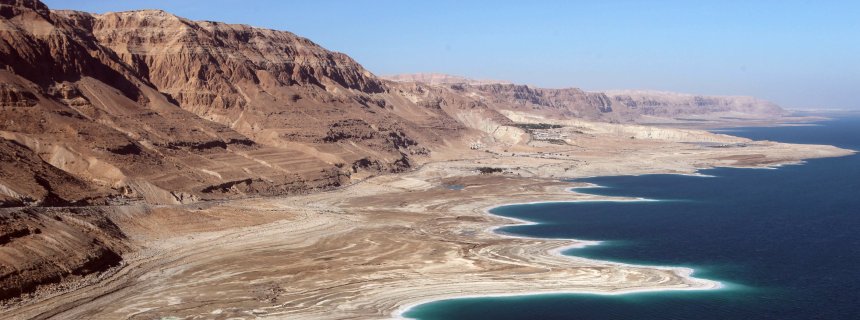
Even as it shrinks in size, the Dead Sea, a turquoise blue shimmering salt lake, remains a mystical place. Boat jetties jut out into nothingness, abandoned as the water has retreated further and further; each year the level dropping by a meter. The Dead Sea is dwindling to nothing, deprived of water by humans.

Where there once was water, there is now a crumbling coastline, which is already riddled with deep craters that can open up suddenly. Nonetheless, the lake’s withered beauty still attracts many to its shores.

The only question is, for how long?

The Dead Sea is now set to be saved — but the plans of its self-appointed savior may actually turn out to be more like euthanasia.

Last week, Israeli Energy Minister Silvan Shalom, together with his Jordanian and Palestinian counterparts, agreed to a joint project which, it was solemnly declared, would prevent the Dead Sea from drying out. At the same time, what Shalom described as an “historic agreement” would secure water supplies for the notoriously arid region — and send a signal of international understanding in the Middle East.

The Dead Sea’s water level is dropping at an alarming rate.

Nothing But a Waste

But numerous environmentalists and the 20 Palestinian NGOs who spoke out in advance against the project argue that the acclaimed agreement is nothing but a waste.

The plan is to build a desalination plant in the Jordanian city of Aqaba on the Red Sea, which will then supply both the neighboring Israeli city of Eilat and southern Jordan with fresh water. The brine that is created in the desalination process will be pumped 180 kilometers through a pipeline to the Dead Sea.

Will this stop the Dead Sea from shrinking?

“Nonsense,” says Gidon Bromberg simply. As director of the environmental organization Friends of the Earth Middle East, the Israeli lawyer has been involved with issues surrounding the Dead Sea for more than a decade.

What is taking place, Bromberg says, is not a ground-breaking project to save the lake, but simply a water exchange. Israel and Jordan want to build up their water supplies, and the supposedly economically-friendly rescue action is an excellent way to attract international money to do so.

Catastrophic Ecological Consequences

Bromberg is not the only one who thinks like this, primarily because the 200 million cubic meters of brine set to be pumped into the Dead Sea by 2017 at the earliest only make up about 10 percent of the water needed to halt the lake’s retreat.

“The amount of water is not sufficient,” says hydrogeologist Christian Siebert from the Helmholtz Center for Environmental Research in the German city of Halle, who is investigating how the decline of the water level in the Dead Sea is affecting aquifers in the region. “And the environmental consequences are not foreseeable.”

What worries Siebert and environmentalists is the question of what will happen when mixing seawater and lake water.

Experiments carried out by Israeli microbiologists on behalf of the Geological Survey of Israel show that the transfusion of water from the Red Sea could have catastrophic ecological consequences for the Dead Sea. They could include: an uncontrolled growth of red or green algae; the proliferation of bacteria; the lake turning a rusty red color; and the formation of white gypsum crystals on the water’s surface.

“The lake would be completely cloudy,” says hydrogeologist Siebert. It would also be possible that the water from the Red Sea would not mix properly with the water from the Dead Sea because of different densities, but would rather form layers. In the worst case scenario, according to Siebert, microorganisms could establish themselves and convert the gypsum into noxious, putrid, stinking hydrogen sulfide.

The brine produced as the product of desalination is also usually contaminated with chemicals and copper.

Until now, people with skin conditions have been drawn to the Dead Sea because of the healing power of its waters. But who wants to bathe in a foul-smelling lake full of chemical waste?

Siebert and Bromberg agree that anyone wanting to save the Dead Sea must first save the Jordan River. It once supplied the salt lake with its water; now the flow has almost completely dried up. The river, which plays a prominent role in the Bible, is today just a miserable, dirty little trickle.

Water As a Weapon

An incredible 98 percent of the Jordan River’s water is diverted by bordering countries, and more than half of that by Israel. Until two years ago, Syria and Jordan shared the rest; the Syrians have now largely been left out in the cold due to the country’s civil war. The Palestinians claim about 5 percent.

To restore the river, Israel and Jordan would have to do without one-third of its water. It’s a tall order in a region where water is also always a weapon, an instrument of power.

Bromberg, therefore, has a different solution in mind, namely that the chemical companies on the shores of the Dead Sea, and especially the Israeli Dead Sea Works Company and the Jordanian Arab Potash Company, must finally relinquish some of the millions they make selling salts and other minerals.

In order to produce these substances, the firms allow water to evaporate from the salt lake in massive quantities. For this precious water, they pay nothing.

Translated from the German by David Knight.

Source: Der Spiegel.

Pure Water Gazette Fair Use Statement


Ontario’s Grand River loaded with artificial sweeteners, study finds

by Ivan Semeniuk, Science Reporteer

Ontario’s Grand River is so chock full of artificial sweeteners that scientists say the chemicals can be used to track the movement of treated waste in the region’s municipal water supplies.

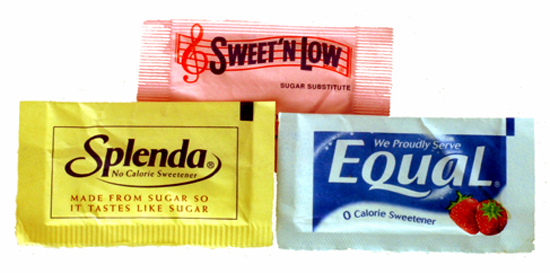
Artificial sweeteners are used as sugar substitutes in diet drinks and foods.

They impart no calories because they are not readily broken down in the human digestive system, so they tend to exit the body intact.

But that persistence also means the sweeteners linger long after they are flushed away.

They survive processing in waste-water treatment plants, find their way into the environment and reappear in drinking water.

As part of a long-term study, scientists with Environment Canada and the University of Waterloo repeatedly sampled 23 sites along the Grand River system as well as household taps.

Four artificial sweeteners – acesulfame, saccharin, cyclamate and sucralose – were detected, in some cases at higher concentrations than reported anywhere else in the world.

At one site, the researcher calculated that the equivalent of 90,000 to 190,000 cans of diet soda were being consumed each day to account for the quantity of acesulfame they measured.

“If you think about all those cans of pop floating down the river, it’s quite an image,” said Sherry Schiff, a biogeochemist at the University of Waterloo and a co-author of the study, published Wednesday in the open access journal PLOS ONE.

Nearly one million people live in the region, which includes the communities of Kitchener-Waterloo, Guelph, Cambridge and Brantford.

About half of those people rely on the Grand for their drinking water.

While the sweeteners are approved for human consumption and are present in far greater concentrations in diet products, their appearance in drinking water may come as an unnerving surprise to some. The main aim of the study was to see how well the chemicals can be used to keep tabs on where wastewater ends up.

Because of its stability, acesulfame in particular “seems to be perhaps the most ideal tracer of wastewater found so far,” said John Spoelstra, a research scientist at  the National Water Research Institute in Burlington, Ont., and lead author on the study.

Armed with such a tracer, he added, scientists can better spot where human waste is coming into a watershed – not only from municipal water treatment plants, but from septic systems that may be leaking into groundwater. The changing concentrations of the sweeteners can also be compared with that of pharmaceuticals or other chemicals that may pose a health risk but whose pathway and evolution in the water system is not well understood.

“We need a tracer to be able to be able to distinguish dilution effects from actual removal and degradation effects,” Dr. Spoelstra said.

He added that while other researchers have looked at artificial sweeteners in drinking water systems, this is the first time a study has documented their movement on the scale of an entire watershed.

“We’re looking at how sweeteners are accumulating in that water as you move downstream and more and more wastewater is coming into the system,” Dr. Spoelstra said.

The authors stressed that more research is needed to understand the long-term impact of the sweeteners on the environment. Acesulfame, for example, can break down under exposure to ultraviolet light from the sun, producing compounds that are more toxic than the sweetener itself.

The Grand River is the largest Ontario River that drains into Lake Erie.

Why More Isn’t Always Better When You’re Sanitizing A Water Well

by Pure Water Annie

Pure Water Gazette Technical Writer Pure Water Annie clears the water on the troublesome issue of “shocking” a water well.

When a residential water well is “shocked” with chlorine to rid it of bacterial contaminants,  it is usually assumed that just dumping some bleach down the well will do the job.  This article will show you why quantity matters when it comes to adding chlorine to a well and why it is important to follow one of the many good  instruction sheets on well sanitation or to use a chlorine product especially designed for the task.

When chlorine is added to water, it produces hypochlorous acid (HOCl) and hychlorite ions (OCl-).  Hypochlorous acid is by far the most effective and quickest  chlorine ingredient for sanitizing.  It is 80 times as fast and efficient as OCl-.

What is often not considered is that hypochlorous acid is produced most abundantly at a relatively low pH.  Between pH 5 and 7, chlorine as hypochlorous acid acts mainly as a sanitizer–what you need for killing bacteria. As the pH goes up and the water becomes more alkaline, chlorine begins to act more as an oxidizer (what you need for precipitating iron or manganese).

The problem is that when you add calcium hypochlorite (chlorine pellets) or sodium hypochlorite (liquid bleach), you also raise the pH of the water. As the pH goes up, the chlorine loses its sanitizing power.  At pH 9, the chlorine is mainly an oxidizer and will not kill bacteria efficiently.

In a word, over-chlorinating  raises the pH to the point where chlorine does not kill bacteria.

HOCl predominates between pH levels of about 4 and 7.  After 7 it drops off rapidly.

Although acids such as muriatic acid or sodium bisulfate are sometimes used to keep pH low and thus enhance the sanitizing power of chlorine, for homeowners whose wells are in the normal pH range it makes most sense to simply avoid over-chlorinating by following the dosage and procedures put forth by experts in the field.


How Plastic In The Ocean Is Contaminating Your Seafood

  by Eliza Barclay

We’ve long known that the fish we eat are exposed to toxic chemicals in the rivers, bays and oceans they inhabit. The substance that’s gotten the most attention — because it has shown up at disturbingly high levels in some fish — is mercury.

But mercury is just one of a slew of synthetic and organic pollutants that fish can ingest and absorb into their tissue. Sometimes it’s because we’re dumping chemicals right into the ocean. But as a study published recently in Nature, Scientific Reports helps illuminate, sometimes fish get chemicals from the plastic debris they ingest.

“The ocean is basically a toilet bowl for all of our chemical pollutants and waste in general,” saysChelsea Rochman, a postdoctoral researcher at the University of California, Davis, who authored the study. “Eventually, we start to see those contaminants high up in the food chain, in seafood and wildlife.”

For many years, scientists have known that chemicals will move up the food chain as predators absorb the chemicals consumed by their prey. That’s why the biggest, fattiest fish, like tuna and swordfish, tend to have the highest levels of mercury, polychlorinated biphenyls (PCBs) and other dioxins. (And that’s concerning, given that canned tuna was the second most popular fish consumed in the U.S. in 2012, according to the National Fisheries Institute.)

“A lot of people are eating seafood all the time, and fish are eating plastic all the time, so I think that’s a problem,” says a marine toxicologist.

What scientists didn’t know was exactly what role plastics played in transferring these chemicals into the food chain. To find out, Rochman and her co-authors fed medaka, a fish species often used in experiments, three different diets.

One group of medaka got regular fish food, one group got a diet that was 10 percent “clean” plastic (with no pollutants) and a third group got a diet with 10 percent plastic that had been soaking in the San Diego Bay for several months. When they tested the fish two months later, they found that the ones on the marine plastic diet had much higher levels of persistent organic pollutants.

“Plastics — when they end up in the ocean — are a sponge for chemicals already out there,” says Rochman. “We found that when the plastic interacts with the juices in the [fish’s] stomach, the chemicals come off of plastic and are transferred into the bloodstream or tissue.” The fish on the marine plastic diet were also more likely to have tumors and liver problems.


While it’s impossible to know whether any given fish you buy at the seafood counter has consumed this much plastic, Rochman’s findings do have implications for human health, she notes. “A lot of people are eating seafood all the time, and fish are eating plastic all the time, so I think that’s a problem.”

And there’s a lot of plastic out there in the open ocean. As Edward Humes, author of Garbology,told Fresh Air‘s Terry Gross in 2012, the weight of plastic finding its way into the sea each year is estimated to be equivalent to the weight of 40 aircraft carriers.

Consider the five massive gyres of trash particles swirling around in the Indian, Atlantic and Pacific oceans alone. Those gyres, Hume told Gross, contain “plastic that has been weathered and broken down by the elements into these little bits, and it’s getting into the food chain.”

One of those gyres is the infamous Great Pacific Garbage Patch. Fish could encounter the plastic in those gyres, but also much closer to shore, says Rochman.

Even so, the consensus in the public health community still seems to be that the benefits of eating fish — because of their omega-3 fatty acids, among other assets — exceed the potential risks. And many researchers advocating for Americans to increase their fish consumption argue that the levels of dioxins, PCBs and other toxic chemicals in fish are generally too low to be of concern.

The Environmental Protection Agency does put out advisories to warn consumers when fish get contaminated with chemicals in local U.S. waters. But a lot of our seafood now comes from foreign waters, which the EPA does not monitor. Just a tiny fraction of imported fish get tested for contaminants.

As for Rochman, she says her research in marine toxicology has persuaded her to eat seafood no more than twice per week. And she now avoids swordfish altogether.

Source:  National Public Radio.

Pure Water Gazette Fair Use Statement

The difference between concentration and dose

 Editor’s Note:  The following is freely adapted from “The  Basics of Regulatory Toxicology: Protecting the Public from Harmful Substances,” by  Paul Connett.  Dr. Connett’s article addresses specifically the addition of fluoride to drinking water, but the information he presents can be generalized to apply to any toxic substance that is either accidentally or purposely added to drinking water. It should be obvious to anyone who considers the complexity of attempting to medicate the public by adding chemicals to water that adding a potent poison like fluoride to a public water supply isn’t quite the same thing as adding iodine to table salt. — Hardly Waite.

Concentration is measured in milligrams (mg) of fluoride per liter (1 mg/liter = 1 part per million or ppm). This can be controlled at the water works. Dose is measured in mg/day and this cannot be controlled as it depends on how much someone drinks – and some drink a lot – and how much fluoride they are getting from other sources. It is the total dose that has the potential to harm someone. The concentration (mg/liter) offers no guarantee of safety.

The difference between dose and dosage

The same dose (mg/day) can have different affects on different people. There are two reasons for this:

1) because in a large population there is a large range of sensitivity to any toxic substance,  and

2) because the same dose can have a very different affect on people of different bodyweights.  This is especially relevant when comparing the impacts of the same dose on adults and infants. That is why toxicologists use a different measure called dosage. In this they take account of bodyweight by dividing the dose in mg/day by the adult’s average bodyweight of 70 kg.

Thus supposing it was determined that 7 mg/day was safe for an adult (for some health end point), then the safe dosage (sometimes referred to as a safe reference dose) which can be applied to anyone of any weight including an infant, would be 0.1 mg/kg bodyweight per day.  (7mg/day divided by 70 kg = 0.1 mg/kg/day.)

Going from safe dosage to safe dose for a particular bodyweight

From a safe dosage we can work out a safe dose for any age range by multiplying the safe dosage by the average bodyweight for that age range. Thus for a 7 kg infant the safe dose for this hypothetical situation would be 0.7 mg/day and for a 20 kg child it would be 2 mg/day.

The EPA’s Iris Reference Dose (Dosage)

Going back to the real world. The (EPA) determined a safe reference dosage (for the end point of moderate dental fluorosis) of 0.06 mg/kg/day (the so-called IRIS reference dose). Using this Iris reference dose we can determine the safe dose for a bottle-fed infant – at least for dental fluorosis. Assuming an average bodyweight of 7 kg, the safe dose would be 7 kg x 0.06 mg/kg/day = 0.42 mg/day.

A 7 kg infant drinking 800 ml of formula per day made up with fluoridated water at 1 ppm, would receive 0.8 liters x 1 mg/liter/ day = 0.8 mg/day. In other words a bottle-fed baby consuming water at 1 ppm fluoride would get about twice the safe dose based upon the EPA’s IRIS safe reference dose.

The Agency for Toxic Substances and Disease Registry’s safe reference dosage for bone

ATSDR’s reference dosage for the end point of bone damage was set at 0.05 mg/kg/day. A 70 kg adult would exceed this safe reference dosage if they ingested more than 3.5 mg/day (0.05 mg/kg/day x 70 kg = 3.5 mg/day). Such an adult could exceed this safe reference dosage by

i) drinking 3.5 liters of water at 1 ppm (3.5 L x 1 mg/Liter/day = 3.5 mg/day)

ii) drinking 2.5 liters of water at 1 ppm and getting 1 mg/day from other sources.

iii) drinking 1.5 liters of water at 1 ppm and getting 2 mg/day from other sources.

A U.S. Department of Health and Human Service’s (DHHS) report from 1991 estimated that the range of exposure of the American adult was 1.6 to 6.6 mg/day from all sources.

The large range of sensitivity to any toxic substance

In any large population we can anticipate a very large range of sensitivity to any toxic substance. Like other human traits such sensitivity follows a normal distribution curve (the famous bell-shaped curve). The average person will have an average response but at the two tails – we will have people who are very sensitive at one end and very resistant at the other. Typically we assume some people are going to be 10 times more sensitive than others. This is then used to generate a safety factor of 10 (sometimes referred to as the intra-species safety factor).

Thus if we find harm in a small human study and wish to determine the level that would protect everyone in a large population from that harm this is what we do. We take the dose, which has been found to cause no harm (the so-called no observable adverse effect level or NOAEL) and divide that dose by 10 to give a safe dose for the most sensitive individual in the population. Frequently we don’t have a NOAEL and so we have to use a LOAEL (the lowest observable adverse effect level) and divide that by 100. Sometimes this process is corrupted and it is the LOAEL not the NOAEL that is divided by 10.

Margin of Safety Analysis

Applying these calculations in a real world situation is called a Margin of Safety Analysis and shockingly it is very seldom considered by people who promote fluoridation. They simply use the very crude and highly misleading approach of comparing the concentration used in the study group with the concentration of the fluoride in the water of the fluoridated population as discussed above.

An example of a Margin of Safety analysis using an IQ study

Here I will attempt a real world calculation for lowered IQ. I will use the study by Xiang et al. 2003 who reported a threshold for lowering of IQ at 1.9 ppm of fluoride in the water.

Our first task is to estimate the dose range this represents for the children in the study – which of course, will depend on how much water they drink and how much they get from other sources. We believe very few of these rural Chinese children use fluoridated toothpaste and thus their daily dose comes largely from the water.

• If they drank 2 liters of water per day at 1.9 mg/liter their daily dose would be (2 L x 1.9 mg/L ) = 3.8 mg/day.

• If they drank 1 liter of water per day their daily dose would be 1.9 mg/day

• If they drank 0.5 liters of water per day their daily dose would be approx 1 mg/day.

In other words a reasonable estimate of the range of dose leading to a lowered IQ was approximately 1- 4 mg/day.

If we treat this as a NOAEL the safe range of doses of fluoride to protect the most sensitive child in a large population would be 0.1 to 0.4 mg/day (1-4 mg/day divided by 10). In other words we wouldn’t want a child in a large population drinking more than 400 ml (0.4 L) of water (0.4 liters/day x 1 mg/liter = 0. 4 mg/day).

If the Xiang’s et al. study is valid a responsible regulatory authority would not allow water fluoridation. Little wonder then that fluoridation promoters are doing everything they can to criticize the methodology of the Xiang et al. study and the methodology of all the other 36 studies (out of 43) that have found a lowering of IQ associated with drinking naturally occurring fluoridated water ranging from 0.9 to 11.5 ppm.

Fourteen of the studies, ten of which were part of the 27 studies reviewed in the meta analysis carried out by the Harvard team (Choi et al., 2012), found a lowering of IQ at or lower than 3 ppm. Using the same calculation as above the lowering of IQ was associated with a range of fluoride from 1.5 – 6 mg/day in these fourteen studies. Thus dividing by the safety margin of 10 a dose estimated to be safe for the most sensitive child in a large population would range from 0.15 to 0.6 mg/day.

Even if we take the highest (i.e. least conservative) estimate, such a dose would be exceeded by a child drinking about two large glasses of 1 ppm fluoridated water per day (it could be worse than that because I am using these doses as NOAELs and not LOAELs).

US EPA Office of Water is Not Doing its job.

Using a large amount of taxpayers’ money the US EPA paid the NRC to do the review of their safe drinking water standards discussed above. When the NRC panel released its report in March 2006 it concluded that the EPA’s current safe drinking water standard of 4 ppm (both the MCL and the MCLG are set at 4 ppm) were not protective of health. The panel recommended that the EPA Office of Water perform a new risk assessment and determine a new safe MCLG (maximum contaminant level goal).

The difference between an MCL and an MCLG

The MCL (or maximum contaminant level) for the contaminant in question is a federally enforceable standard and for fluoride it was set at 4 ppm in 1986 by the EPA Office of Water.

The MCLG (or maximum contaminant level goal) is a goal based upon the best science as far as determining harm is concerned with a margin of safety analysis applied sufficient “to protect the most vulnerable from known and reasonably anticipated health effects.” As the name suggests this is not a standard but an ideal goal. Incredibly this was also set at 4 ppm for fluoride in 1986.

What frequently happens for naturally occurring contaminants (e.g. arsenic) is that the economic costs of removing the contaminant to the desired goal (i.e. MCLG) is prohibitively expensive and so a compromise is set between the ideal goal and what can be achieved economically. It is this compromise level, which is the MCL. For arsenic – because it is a known human carcinogen – the MCLG is set at 0. The MCL is set at 10 parts per billion (ppb).

The EPA has not determined a new MCLG after 7 years

It is extremely disturbing that after nearly 7 years the EPA’s Office of Water has not completed the needed risk assessment to determine a new MCLG.

Had the EPA used any one of several end points finding harm in the NRC (2006) review (but particularly the IQ studies) and performed an appropriate margin of safety analysis as discussed above a new MCLG would have to be set well below 1 ppm and thus end water fluoridation immediately. However, it may be that the EPA’s Office of Water is not anxious to remove the rug from under the program that the DHHS (or its preceding agencies) have championed for over 68 years.

Going from a safe reference dose to an MCLG for fluoride

Once one has determined a safe dose sufficient to protect for the full range of sensitivity in a large population the following steps are needed to determine a safe drinking water standard or in this case the MCLG (the maximum contaminant level goal).

We will use another real world example. As explained above using the 14 IQ studies that found a lowering of IQ at 3 ppm or lower a conservative safe dose would be 0.6 mg/day (actually more conservatively it would be 0.15 mg/day).

Now we would have to subtract from this the dose ingested from other fluoride sources. For many children this would be well over 0.6 mg/day (from swallowing toothpaste and food sources). Thus the regulatory agency would have to conclude that given current exposures to fluoride no extra fluoride could be condoned. Thus the MCLG would have to be set at ZERO ppm (like arsenic and lead) – and that dear readers would be the end, finito, morte for water fluoridation!*

This looks like a clear example of bad politics keeping fluoridation afloat. If you can follow the above arguments you will understand this and be in a better position to argue the case.

Given a fair hearing, an application of honest and standard risk assessment procedures and an open-minded judge fluoridation would be over. It is a matter of simple arithmetic and scientific integrity. There’s the rub. Between that arithmetic and this result are powerful political forces who – for reasons I for one cannot fathom – feel the need to keep this practice alive at any cost. That cost today probably includes the lowering of the IQ of our children.

The shift in IQ maybe small, but as Philippe Grandjean (one of the authors of the Harvard meta-analysis by Choi et al, 2012) in his new book (Only Once Chance) explains, a small shift in IQ in the whole population is incredibly serious. For example, a negative shift of 5 IQ points would halve the number of geniuses in our society and double the number of mentally handicapped.

*Completing the MCLG calculation

Had the number after subtraction of other sources of fluoride from the safe dose yielded a number greater than zero then a MCLG would be determined on the basis of an estimate of how much water people drink per day. Typically the EPA assumes that the average person drinks 2 liters of water per day. However, this assumption does not protect a higher-than-average water drinker. Thus at this point the EPA would have to determine what percentage of the population it wishes to protect.

In the 1986 derivation of the MCLG the EPA derived a safe dose of 8mg/day. Then ignoring other sources of fluoride, they assumed an average water consumption was 2 liters per day and thus declared that 4 mg/liter was a safe level. i.e. if someone drank two liters of water at 4 ppm per day they would get 8 mg/day, 2 L/day x 4mg/L = 8 mg / day.